In the UK, company cars are a popular benefit provided by many employers to employees. However, these cars come with tax obligations, which can vary based on several factors. Understanding company car tax UK is crucial for both employees and employers, as the tax implications can significantly impact your finances.
This article will provide an in-depth explanation of the company car tax system in the UK, breaking down the various aspects of tax calculation, benefits, and how it works. Whether you’re an employee using a company car or an employer considering offering one, this guide is designed to make the process clearer.
At Adam Accountancy, we specialize in providing expert advice on taxation matters, including company car tax UK. Our team of experienced professionals, including chartered accountants in Berkshire, can help you navigate the complexities of this tax system, ensuring that you comply with all regulations and avoid costly mistakes.
1. What is Company Car Tax?
Company car tax is a form of taxation levied on employees who are provided with a car by their employer for both work and personal use. The tax is calculated based on the car’s value, its emissions, and the fuel type. It is considered a benefit-in-kind (BIK), meaning it is treated as income and taxed accordingly.
The amount of company car tax you pay depends on several factors, including:
- The car’s CO2 emissions: Cars with lower emissions attract lower tax rates.
- The car’s list price: The higher the list price, the higher the tax liability.
- The fuel type: Electric cars may have lower taxes compared to petrol or diesel vehicles.
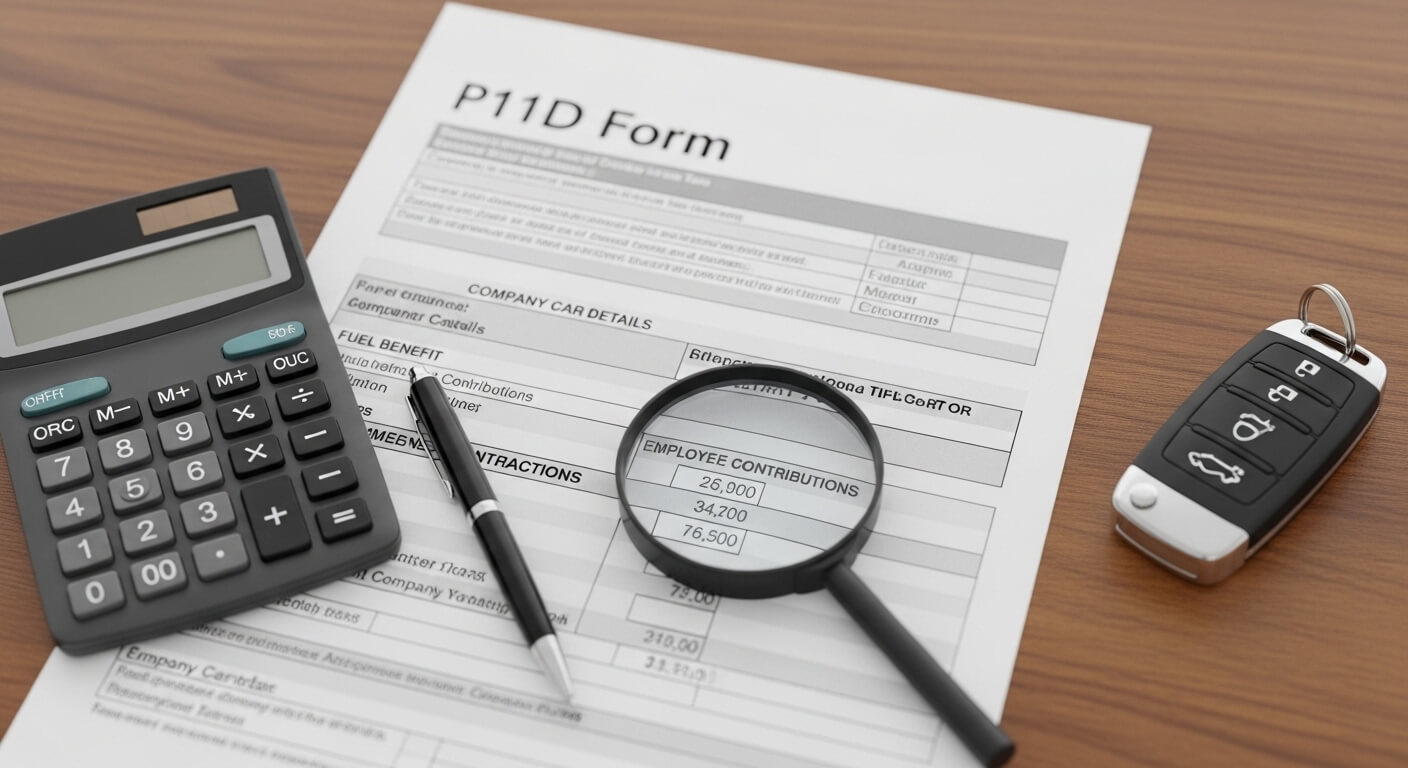
Employers must report company car benefits on a P11D form, and employees will then see the tax added to their income tax. If you’re an employee using a company car, you’ll need to factor in this tax when calculating your overall tax liability.
Understanding company car tax UK is essential to avoid unexpected bills and ensure that you comply with tax regulations.
2. How Does Company Car Work?
A company car is a vehicle provided by an employer for an employee’s use, primarily for business purposes, but often also for personal use. The main purpose of a company car is to help employees carry out their work-related duties, such as commuting to meetings or transporting goods.
The process works by the employer purchasing or leasing the car, and the employee then has access to it for their personal use as well. The tax implications arise because the car is not solely used for business but also for personal reasons. This makes it a taxable benefit.
To determine the tax code for company cars, the value of the car, its CO2 emissions, and the amount of private use are considered. The more expensive and polluting the car, the higher the tax burden will be.
Employees who have a company car may also be offered additional benefits, such as insurance and maintenance coverage, which are included as part of the overall benefits package.
3. Taxation of Company Cars
Company car tax UK is based on a complex system known as the Benefit-in-Kind (BIK) tax. The amount of tax you pay depends on the car’s emissions, list price, fuel type, and the level of personal use. The BIK tax is calculated using the following key factors:
1. CO2 Emissions
The CO2 emissions of a car play a significant role in determining the amount of tax you will pay. Cars with lower emissions attract a lower BIK tax rate. For instance, electric cars tend to have lower emissions and can benefit from reduced taxes.
2. List Price
The list price of the car, including any optional extras, is used to calculate the base value of the car for tax purposes. A higher list price increases the amount of tax owed.
3. Fuel Type
The fuel type of the vehicle also impacts the tax rate. Electric and hybrid cars typically have lower rates than petrol or diesel cars. This is in line with the UK government’s focus on reducing carbon emissions.
4. Personal Use
The level of personal use also influences the tax rate. If the car is used primarily for personal use, the tax liability will be higher. However, if it’s only used for business purposes, the tax liability may be reduced.
Understanding how these factors interact will help both employees and employers make informed decisions about company car use and taxation.
4. How to Calculate Company Car Tax
Calculating company car tax UK involves several steps. Here’s a basic guide to help you understand how the process works:
Step 1: Identify the car’s list price
The first step is determining the car’s list price, which includes the cost of the car, plus any optional extras (such as a sunroof or advanced safety features).
Step 2: Check the CO2 emissions
The next step is identifying the car’s CO2 emissions. This will determine the tax band for the vehicle. Lower emissions mean a lower BIK rate.
Step 3: Determine the fuel type
The fuel type of the vehicle (electric, petrol, diesel, hybrid) affects the BIK tax rate. Electric cars, for example, typically attract a lower rate than petrol or diesel cars.
Step 4: Personal use factor
If the car is used for personal reasons, you must calculate the percentage of private use. The more the car is used for personal purposes, the higher the tax will be.
Once these factors are identified, the tax rate is applied to the list price of the car, and the appropriate BIK tax is calculated.
5. Company Car Benefits
A company car offers various benefits for both employees and employers. These benefits include:
- Convenience: Employees have access to a vehicle for both business and personal use.
- Cost savings: Employees may save on personal vehicle expenses like maintenance and insurance, as these are typically covered by the employer.
- Tax efficiency: For employers, providing a company car can be a tax-efficient way to offer benefits to employees.
However, these benefits come with the responsibility of company car tax. The more expensive or polluting the vehicle, the higher the tax. It’s important to weigh the benefits against the potential tax burden.
6. Income Tax on Company Car
Income tax on company cars is based on the value of the car and its benefits. When you receive a company car, the value of the benefit is added to your income for tax purposes. The amount of tax you pay depends on several factors, including the car’s list price, emissions, and how much you use the car for personal purposes.
If you have a company car, you must report the benefit on your self-assessment tax return. If the company car is used primarily for personal reasons, it could significantly increase your income tax bill.
Understanding how income tax on company cars works will help you make informed decisions regarding your car benefits and tax liabilities.
7. VAT on Company Cars
VAT on company cars in the UK can be complicated. In most cases, VAT cannot be reclaimed on company cars unless they are used solely for business purposes. However, if the car is used for both business and personal use, you may only be able to reclaim a portion of the VAT.
For instance, if you use the car for business purposes 70% of the time and for personal purposes 30% of the time, you may be able to reclaim 70% of the VAT on the car. The rules around VAT on company cars are specific, so it’s essential to consult with an experienced VAT accountant to ensure compliance.
8. What to Do if You Have a Company Car
If you’re assigned a company car, it’s important to keep accurate records of your use. This includes keeping track of both business and personal mileage. You’ll need this information to accurately report the company car benefits on your self-assessment tax return.
Additionally, be sure to review your tax code for company car use to ensure the proper amount of tax is being deducted from your income. If you’re unsure about your tax code or need assistance, consulting a professional tax accountant can help you avoid mistakes and optimize your tax position.
9. Company Car Tax and Small Business Owners
For small business owners, providing a company car to employees can be a useful incentive. However, it’s essential to understand how company car tax UK works for small businesses. Small business accountants can help navigate the tax rules and ensure compliance.
For small businesses, offering company cars can also be a way to attract and retain employees, but it’s important to consider the long-term tax implications. A professional accountant can help determine the best course of action, whether that’s offering a company car, a car allowance, or alternative benefits.
10. Alternatives to Company Cars
If the tax burden of a company car seems too high, there are alternatives. For instance, a car allowance can provide employees with the flexibility to choose their own vehicle without the tax implications of a company car. Additionally, using personal cars for business purposes can be an option for some employees.
Employers can also consider offering other benefits that don’t carry the same tax burden, such as contributions to public transportation or cycling schemes.
11. Corporate Tax on Company Cars
The corporate tax implications of company cars are significant. Providing company cars can impact your business’s corporate tax filings, as the cost of the car and its associated benefits may be deductible. However, the car’s list price, emissions, and fuel type must be taken into account when claiming deductions.
Corporation tax accountants can assist with navigating the complexities of claiming tax relief on company cars and ensuring your business stays compliant with HMRC.
12. How to Avoid Taxation Pitfalls
There are several common mistakes businesses and employees make when dealing with company car tax UK. These include failing to accurately report the car’s value, not tracking personal use, or misclassifying the car’s emissions.
Consulting with a professional, such as a chartered accountant Berkshire, can help you avoid these pitfalls and ensure that you’re maximizing any potential tax savings.
13. FAQs
- What is company car tax?
- Company car tax is a tax on the benefit of using a company car for both business and personal use. It’s considered a Benefit-in-Kind (BIK) and is taxed as part of your income.
- How does company car tax work?
- Company car tax works by taxing employees on the benefit they receive from using a company car for personal use. The amount of tax depends on the car’s value, CO2 emissions, and fuel type.
- What is a tax code for a company car?
- The tax code for a company car is a code used by HMRC to determine how much tax you should pay on the benefit of having a company car. It reflects your taxable benefit from the car.
- Do I pay income tax on company cars?
- Yes, the value of the company car is considered a taxable benefit and is added to your income for tax purposes. This means you pay income tax on it.
- Can I reclaim VAT on a company car?
- You can reclaim VAT on a company car if it is used solely for business purposes. If the car is used for both business and personal use, only a portion of the VAT can be reclaimed.
- What are the tax rates for company cars?
- The tax rates for company cars depend on factors like CO2 emissions, list price, and fuel type. Cars with lower emissions and lower list prices are taxed at lower rates.
- Is VAT charged on a company car?
- Yes, VAT is charged on a company car when it is purchased. However, VAT can only be reclaimed if the car is used exclusively for business purposes.
- What is Benefit-in-Kind (BIK) tax?
- Benefit-in-Kind (BIK) tax is the tax levied on benefits employees receive that are not part of their salary, such as the use of a company car for personal purposes.
- How is BIK tax calculated for company cars?
- BIK tax is calculated based on the car’s list price, CO2 emissions, and fuel type. The higher the emissions and the list price, the higher the BIK tax.
- What happens if I don’t report my company car on my tax return?
- Failing to report a company car on your tax return can result in penalties and fines from HMRC, as it is considered a taxable benefit.
- Can an employer provide a company car without tax implications?
- No, any car provided for personal use will have tax implications. However, if the car is used strictly for business purposes, the tax liability can be minimized.
- Are electric company cars taxed?
- Yes, electric company cars are taxed, but they are typically subject to lower rates of tax compared to petrol or diesel cars, due to their lower CO2 emissions.
- How is the list price of a company car determined?
- The list price is the amount the car would cost if purchased new, including optional extras like sunroofs or alloy wheels.
- Can I get a company car if I work part-time?
- Yes, employees working part-time can receive a company car. However, the tax implications would still apply based on the car’s value and emissions.
- Can I choose which company car I want?
- The ability to choose a company car depends on your employer’s policy. Some employers offer a selection of cars, while others assign vehicles based on job role or seniority.
- Are hybrid cars taxed at a lower rate?
- Yes, hybrid cars generally have lower CO2 emissions compared to petrol or diesel cars, which means they attract a lower BIK tax rate.
- What is the difference between a company car and a car allowance?
- A company car is provided by your employer, while a car allowance is a sum of money given to you by your employer to buy or lease your own vehicle.
- How can I reduce the tax on a company car?
- You can reduce your company car tax by choosing a car with lower emissions, opting for an electric or hybrid vehicle, and minimizing the personal use of the car.
- Do I need to pay tax on a company van?
- Yes, if the van is used for personal purposes, it is subject to tax. However, there are different tax rules for vans, and the tax rate is usually lower than for cars.
- Can I claim the cost of a company car against my income?
- No, the cost of a company car cannot be claimed as a tax-deductible expense on your income tax return. However, the car’s value affects the amount of tax you pay.
- What is a “company car benefit” in the eyes of HMRC?
- A company car benefit is the personal use of a car provided by your employer. This benefit is taxable, and the value is added to your income for tax purposes.
- Can a company car be used for personal purposes without extra tax?
- No, personal use of a company car always results in additional tax liability, even if it is used for just a small amount of personal travel.
- What happens if I use a company car for only business purposes?
- If a company car is used solely for business purposes, the tax liability is significantly reduced. However, this must be substantiated with records of business use.
- What does it mean if my company car is classified as a “high-emission” vehicle?
- High-emission vehicles are subject to higher BIK tax rates. Cars with higher CO2 emissions contribute more to environmental pollution, so they are taxed at a higher rate.
- Can I use a company car for business trips abroad?
- Yes, you can use a company car for business trips abroad. However, the tax rules regarding personal use remain the same, and you may still need to report any personal use for tax purposes.
- Do employees pay tax on company cars if they don’t use them for personal purposes?
- If the car is used strictly for business purposes, you may not need to pay tax on it. However, the car must not be used for any personal use to qualify for this exemption.
- How can I find out how much tax I will pay on my company car?
- You can use online tax calculators or consult with an accountant to determine the amount of tax you will pay on your company car. The calculation will depend on factors like the car’s value, CO2 emissions, and fuel type.
- Does the age of a company car affect its tax rate?
- The age of the car does not directly affect the tax rate. However, older cars tend to have higher CO2 emissions, which can increase the BIK tax.
- What happens if I return the company car?
- If you return a company car, your employer will no longer report the car benefit for tax purposes. You may be eligible for a tax refund, depending on the amount you’ve paid.
- Should I seek advice from an accountant regarding company car tax?
- Yes, it’s advisable to consult with a professional accountant to understand how company car tax applies to your specific situation and to ensure you’re complying with tax laws.
- Yes, it’s advisable to consult with a professional accountant to understand how company car tax applies to your specific situation and to ensure you’re complying with tax laws.
Conclusion
Understanding company car tax UK is essential for both employers and employees. By being aware of the tax rules and working with professionals like Adam Accountancy, you can ensure compliance and avoid unnecessary costs. If you’re considering offering company cars or receiving one as an employee, make sure you understand the tax implications and consult with an experienced accountant to guide you through the process.
For more information, or if you need help navigating your tax situation, contact Adam Accountancy today.
Looking for professional accounting or tax advice? At Adam Accountancy, our experienced accountants in Slough provide reliable support to individuals, contractors and businesses across the UK.
Call us on 01753 373 505 for a free, no-obligation initial consultation, or contact us using our online form, and our team will be happy to assist you.