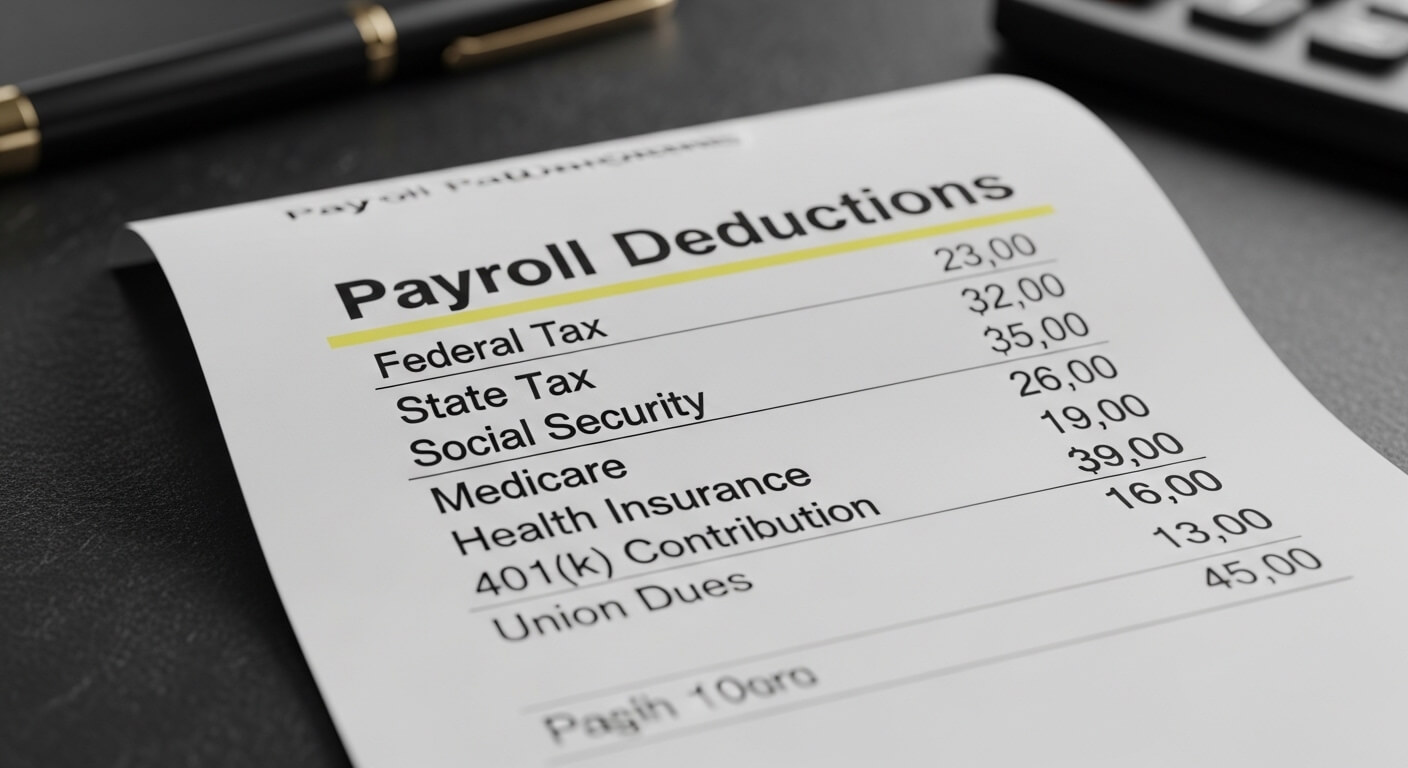
Payroll deductions are one of the most important parts of running payroll in the UK. They affect employees, employers, tax reporting, pension compliance, and day-to-day business operations.For employees, deductions decide how much money reaches the bank account each pay period. Employers create legal duties that must be handled correctly and on time.When payroll is accurate, businesses stay compliant and employees feel confident in their pay. When payroll is wrong, even a small mistake can lead to confusion, complaints, HMRC issues, and damaged trust.This guide explains payroll deductions in a clear and practical way for the UK audience. It is useful for employers, workers, limited companies, landlords, charities, and growing businesses.It also helps people who need professional support from a small business accountant, a VAT accountant, a payroll specialist, or a trusted firm such as Adam Accountancy.By the end of this guide, you will understand how deductions work, what employers can legally deduct, what employees should look for on a payslip, and how professional payroll services can help businesses stay organised.
What Are Payroll Deductions?
Payroll deductions are amounts taken from an employee’s gross pay before the final net amount is paid. These deductions reduce take-home salary and are usually shown clearly on a payslip.
In simple words, gross pay is the full amount earned before deductions. Net pay is the amount the employee receives after deductions have been applied.
Some deductions are required by law. Others are allowed only when the employee agrees or when the employment contract gives the employer the right to make them.
You may also hear related terms such as deductions from pay, deduction of pay, and salary deducted. These terms are often used when discussing payroll, payslips, and employee rights.
In the UK, payroll deductions often include Income Tax, National Insurance, pension contributions, and student loan repayments. In some cases, they may also include court orders, overpayment recovery, or authorised workplace schemes.
Understanding these deductions matters because payroll errors can create problems quickly. An employee may think too much has been taken. An employer may accidentally break the law. A business may also file the wrong figures with HMRC.
That is why professional payroll support from Adam Accountancy or reliable online tax accountants can make a major difference for businesses that want to stay compliant and avoid stress.
Why Payroll Deductions Matter in the UK
Payroll deductions matter because they sit at the point where tax law, employment law, and financial planning all meet. A payroll mistake does not stay in the payroll department. It affects real people and real business records.
For employees, deductions affect budgeting, rent, food, savings, transport, and family expenses. A worker who does not understand pay deductions uk may feel confused or worried every payday.
For employers, the risks are even wider. Errors in deductions from wages uk can lead to complaints, back payments, HMRC penalties, pension breaches, and damaged staff relationships.
Here are five reasons payroll deductions matter:
- They help businesses meet HMRC rules.
- They protect employees from tax and pension mistakes.
- They create accurate records for year-end reporting.
- They reduce payroll disputes.
- They support trust between employer and employee.
Good payroll is not just about software. It is about process, timing, training, and legal awareness. A business that handles deductions correctly is usually better organised in other areas too.
This is why many employers choose expert payroll services, especially when the business is growing fast or managing multiple staff members.
The Difference Between Gross Pay and Net Pay
To understand payroll properly, you first need to understand the difference between gross pay and net pay.
Gross pay is the total amount an employee earns before any deductions are made. This can include salary, wages, overtime, bonuses, and some taxable benefits.
Net pay is the amount the employee actually receives after deductions from salary uk have been taken away. This is the final figure that arrives in the employee’s bank account.
A simple payroll flow looks like this:
- Gross salary is calculated.
- Taxable earnings are reviewed.
- legal deductions are applied.
- voluntary deductions are added if authorised.
- net pay is issued.
Many employees look at their contract salary and then compare it to what lands in their account. When the two numbers feel far apart, they often ask why so much was salary deducted.
The answer is usually found in the payslip. Income Tax, National Insurance, pension contributions, and other items can all reduce the final amount.
For employers, this means payslips should be clear, payroll records should be accurate, and staff should be able to ask questions without confusion.
Main Types of Payroll Deductions in the UK
In the UK, payroll deductions usually fall into two broad categories. These are statutory deductions and non-statutory or voluntary deductions.
Statutory deductions are deductions required by law. Employers must apply them when the rules say they should.
Voluntary deductions are deductions made because the employee has agreed to them or because the contract allows them.
The main types of deductions include:
- Income Tax
- National Insurance
- pension contributions
- student loan deductions
- postgraduate loan deductions
- attachment of earnings orders
- payroll giving
- salary sacrifice adjustments
- repayment of advances
- recovery of overpayments
The phrase statutory tax deductions is usually used for deductions that are legally required through payroll. These are the deductions employers must pay close attention to because they affect HMRC compliance.
The order of deductions can also matter. Some deductions must be processed before others. Some affect taxable pay. Others do not.
This is one reason many businesses use professional payroll services. Good payroll systems help calculate deductions correctly, but expert oversight still matters.
For businesses using outsourced support, firms like Adam Accountancy often help combine payroll, bookkeeping, and tax compliance into one smoother process.
Statutory Payroll Deductions Explained
Statutory deductions are amounts employers must deduct because UK law requires them. These are not optional. If the relevant rules apply, the deduction must be made through payroll.
The main statutory deductions in the UK include:
- Income Tax under PAYE
- National Insurance contributions
- Student Loan repayments
- Postgraduate Loan deductions
- Workplace pension deductions where automatic enrolment applies
These statutory tax deductions are central to payroll compliance. Employers cannot simply decide to skip them or delay them because they must follow HMRC and pension rules.
Income Tax depends on earnings, tax code, and payroll period. National Insurance depends on thresholds and the employee’s status. Student loan deductions depend on earnings and plan details provided through payroll instructions.
Pension deductions may be based on automatic enrolment rules and scheme setup. In many cases, employees are enrolled automatically and contributions are then deducted through payroll.
Employers must report payroll information correctly and on time. Wrong deductions can lead to problems for both the employee and the business.
This is why payroll is often linked closely with wider finance support from bookkeeping accountants, corporation tax accountants, and payroll specialists who understand both payroll law and tax compliance.
Income Tax as a Payroll Deduction
Income Tax is one of the most recognised payroll deductions in the UK. It is collected through the PAYE system, which stands for Pay As You Earn.
Under PAYE, employers deduct tax from employee wages before paying them. The employer then reports and pays that amount to HMRC.
The amount of tax deducted depends on several things. The most important is the employee’s tax code, but earnings level and payroll frequency also matter.
A change in tax code can affect deductions from pay immediately. This is why employees sometimes notice a sudden increase or decrease in tax without first understanding why.
Factors that affect tax deducted include:
- tax code
- annual earnings
- bonus or overtime
- taxable benefits
- previous underpayments
- HMRC instructions
Employees can often review tax details through their personal tax account hmrc account. This can help them understand their tax code and see whether their payroll records look correct.
For employers, Income Tax is not something to estimate casually. It must be calculated correctly through payroll software or managed payroll systems.
A business using online tax services or online tax accountants can often improve accuracy, especially when there are multiple employees, directors, or pay variations.
National Insurance Contributions and Payroll
National Insurance contributions are another major payroll deduction in the UK. These contributions are separate from Income Tax, even though both appear on the payslip and reduce take-home pay.
Employees usually pay National Insurance once earnings cross certain thresholds. Employers may also have to pay employer National Insurance on top of employee wages.
This is one reason uk employer payroll taxes are a major business cost. Many employers look only at gross salary and forget that payroll usually costs more than the headline wage.
National Insurance is important because it helps fund state benefits and is part of the wider tax system. It also affects employment cost planning, budgeting, and recruitment decisions.
For employees, NIC is often one of the biggest parts of deductions from salary uk. For employers, accurate NIC calculations are essential to avoid underpayments or reporting issues.
Thresholds and rules can change, so businesses should not rely on old assumptions. They should use updated payroll systems and expert guidance where needed.
This is especially important for smaller employers who may not have an internal payroll department and instead depend on a small business accountant or outsourced payroll provider.
Workplace Pension Deductions
Pension deductions are now a normal part of payroll for many UK employees. Under automatic enrolment rules, eligible employees are often enrolled into a workplace pension scheme by their employer.
Once enrolled, pension contributions are usually deducted through payroll. In many cases, the employer also contributes to the pension.
This means that pension is one of the most common salaried deductions employees see on their payslips. Some employees expect it, while others notice it only after their first few pay periods.
The amount deducted depends on pension rules, contribution levels, earnings definitions, and the scheme setup used by the employer.
Employers must handle enrolment, deductions, records, and communication properly. Pension compliance is not just about taking money from salary. It is also about meeting legal duties.
Employees may have the right to opt out in some situations, but the process must follow the correct rules. Employers should never assume that pension deductions can be started or stopped casually.
Professional payroll services can help employers handle pensions smoothly, especially when the business is new to payroll or onboarding staff for the first time.
Student Loan and Postgraduate Loan Deductions
Student loan deductions are made through payroll once an employee’s income reaches the relevant threshold. Employers do not decide this on their own. They act based on the information and notices received through payroll systems.
These deductions are separate from Income Tax and National Insurance. That is why an employee may notice a new amount being taken even when their tax code has not changed.
As earnings rise, deductions from pay can increase because student loan repayments begin or become larger. The same can happen with postgraduate loan deductions.
Employees sometimes think these deductions are errors, especially after a pay rise, overtime period, or bonus payment. In many cases, the payroll is correct and the increased earnings triggered the deduction.
Employers should still explain these deductions clearly where possible. A payslip alone does not always answer every employee question.
For businesses, this is another example of why payroll must be accurate and current. Student loan errors can create confusion and may take time to fix.
Court Orders and Attachment of Earnings
Some payroll deductions are made because the employer has received a legal instruction. These may include court orders, child maintenance directions, or other formal attachment of earnings notices.
When this happens, the employer must follow the notice carefully. The deduction is no longer optional. It becomes a legal payroll responsibility.
This kind of deduction of pay must be processed in the right way and within the right limits. Employers should not guess how much to deduct or change the amount without legal basis.
Attachment orders can be sensitive because they involve personal circumstances. Employers should handle them professionally, confidentially, and in line with the instructions provided.
Employees may feel stressed or embarrassed about these deductions. Clear but respectful communication is important.
Businesses that do not have strong payroll knowledge should seek support quickly. Mistakes in legal deductions can create serious problems, both for the employee and the employer.
Voluntary Payroll Deductions
Not every payroll deduction is required by law. Some are voluntary and happen because the employee agrees to them or joins a workplace scheme.
Common voluntary deductions include:
- extra pension contributions
- cycle-to-work schemes
- charity giving
- staff loans
- health cover
- trade union fees
- social club contributions
These deductions are different from statutory tax deductions because the employer cannot simply apply them without proper authorisation.
The key issue is consent. If the employee has agreed in writing, or the employment contract clearly allows the deduction, the employer may be able to make it lawfully.
Voluntary deductions should still be recorded properly and shown clearly on the payslip. Poor recordkeeping can still create disputes.
In some workplaces, payroll giving is a common feature. This can be especially relevant where charity accountants support a non-profit or socially focused organisation and payroll systems include staff giving options.
Common Items That Can Be Deducted From Salary
Employees often ask what employers can actually deduct from salary. The answer depends on law, contract terms, payroll notices, and written agreement.
Common deductions include:
- Income Tax
- National Insurance
- pension contributions
- student loan repayments
- postgraduate loan deductions
- court orders
- salary sacrifice adjustments
- staff loan repayments
- overpayment recovery
- authorised benefit contributions
These are the most common reasons a salary deducted figure may seem lower than expected.
In UK payroll, deductions from wages uk must be lawful, recorded, and explained. Employers should not make surprise deductions just because they feel it is fair.
The phrase deductions from salary uk often appears in employee questions because people want to know whether the amount taken was legal and accurate.
A practical rule is simple. If the deduction is required by law, allowed by contract, or agreed by the employee, it is more likely to be lawful. If none of those apply, the employer should be careful.
When Employers Can Legally Make Deductions
In the UK, an employer can usually make deductions only in limited situations. The most common legal bases are clear and important.
An employer may deduct from pay when:
- the deduction is required by law
- the contract allows it
- the employee has given written agreement
This is why contracts matter so much. A properly drafted employment contract helps define what deductions may apply in certain situations.
A small business accountant may not write employment contracts, but they often help employers understand whether payroll deductions fit with business records and legal process.
If an employer wants to recover a cost, damage amount, or overpayment, they should first check whether they have the legal right to do so. A casual assumption is not enough.
Good payroll practice means keeping written proof of permission or legal basis. That way, if a dispute happens later, the employer has evidence.
Lawful deductions protect the business. They also protect employees by making payroll transparent and consistent.
Unlawful Deductions From Wages
An unlawful deduction happens when money is taken from wages without proper legal authority. This is one of the most common payroll-related employment disputes in the UK.
Examples may include:
- unagreed deductions for breakages
- deductions for till shortages without authority
- uniform costs taken without proper basis
- excessive deductions for training fees
- random adjustments not explained on the payslip
The issue becomes serious because deductions from wages uk are closely connected to employee rights. Workers are allowed to question these deductions and may seek legal advice or make formal claims.
Employers should never treat payroll as a place to solve every workplace problem. Payroll is not the right tool for punishment or unplanned cost recovery.
If there is a genuine reason to recover money, it should be handled carefully and lawfully. That means reviewing the contract, checking written consent, and making sure the deduction is fair and clear.
Good payroll process reduces the risk of unlawful deductions. Good advice reduces it even more.
Understanding Payslips and Payroll Records
A payslip is one of the most important payroll documents. It shows how gross pay became net pay and helps the employee understand what has been taken and why.
A typical UK payslip may show:
- gross pay
- taxable pay
- Income Tax
- National Insurance
- pension contribution
- student loan deduction
- other authorised deductions
- net pay
For employees, payslips are the first place to check when they want to understand pay deductions uk.
For employers, payslips are not enough on their own. The business must also keep payroll records, submission records, pension records, and supporting documents for deductions.
Good payroll records help in several situations. They support year-end reporting. They help answer employee questions. They assist in audits. They also protect the business if there is a disagreement later.
If payroll is outsourced, the employer should still make sure records are complete and accessible. Even with external help, the business remains responsible for overall compliance.
How Payroll Deductions Affect Employees
For employees, payroll deductions affect more than a payslip. They affect real life.
When take-home pay is lower than expected, people may struggle to pay rent, transport, household bills, school costs, or debt repayments. Even correct deductions can feel difficult if they are not clearly understood.
That is why deductions from pay should be transparent and easy to explain. Employees should not have to guess why a certain amount was taken.
A clear payslip helps, but communication matters too. Employees often want simple answers such as:
- Why is my tax higher this month?
- Why has pension started now?
- Why is there a new student loan deduction?
- Why does overtime not feel as valuable after deductions?
When payroll communication is poor, trust drops quickly. Workers may assume the employer made a mistake or acted unfairly.
When payroll communication is strong, most issues are easier to resolve. The employee feels respected, and the employer looks organized.
How Payroll Deductions Affect Employers
Employers have a bigger responsibility than simply paying wages. They must calculate payroll correctly, report it on time, keep records, and deal with employee questions professionally.
If uk employer payroll taxes are wrong, the business may face penalties, corrections, or cash flow problems. If employee deductions are wrong, complaints and reputational damage may follow.
Employers must manage:
- payroll setup
- employee data collection
- HMRC reporting
- pension compliance
- payslip accuracy
- payroll recordkeeping
- payroll corrections when needed
Payroll errors can be costly because they often affect more than one month. A wrong tax code, missed pension duty, or poor payroll setup may continue for several pay periods before someone notices.
For growing businesses, payroll becomes more complex with each new employee. This is why many owners work with bookkeeping accountants, payroll specialists, or firms like Adam Accountancy for ongoing support.
Payroll Deductions for Small Businesses
Small businesses often struggle with payroll because they are balancing many jobs at once. The owner may be handling sales, customer service, operations, and payroll at the same time.
This is where problems start. Payroll seems simple until tax codes change, pension rules apply, or staff ask difficult questions about pay.
A small business accountant can help build a safer payroll system from the beginning. This usually includes:
- correct employee setup
- compliant payslips
- HMRC reporting
- pension processing
- monthly review
- advice when issues arise
For smaller employers, outsourced payroll services are often more efficient than trying to manage everything manually. This reduces the chance of payroll stress and helps the business stay compliant as it grows.
A good payroll setup also supports wider accounting. Wages, tax liabilities, and pension costs all need to appear correctly in the books.
That is why many small businesses prefer joined-up support from firms like Adam Accountancy, where payroll is handled as part of the wider finance picture.
Payroll Deductions for Directors and Limited Companies
Payroll for directors and limited companies can be more complex than standard employee payroll. Directors may take a combination of salary and dividends, and the business may be trying to stay tax efficient while remaining compliant.
This is why payroll often overlaps with advice from corporation tax accountants and other business tax professionals.
Directors may still be subject to tax, National Insurance, and other payroll rules depending on how salary is structured. The company must process payroll properly and report it correctly.
Business owners sometimes search for limited company tax loopholes, but it is important to separate legal tax planning from risky tax avoidance.
A professional accountant helps the business stay within the rules while still using legitimate planning opportunities.
Payroll for directors may also affect year-end company accounts, corporation tax planning, and personal tax returns. That is why businesses often need joined-up support rather than payroll advice in isolation.
Payroll Deductions and Salary Sacrifice Arrangements
Salary sacrifice is an arrangement where the employee agrees to give up part of salary in return for a benefit. This can affect taxable pay and how deductions appear on the payslip.
Common examples include:
- pension contributions
- cycle-to-work schemes
- electric vehicle schemes
Salary sacrifice is not the same as an unauthorised deduction of pay. It is usually a formal change to salary terms agreed in advance.
Because the salary itself changes, the tax and National Insurance calculations may also change. This can reduce take-home pay in one way but also create tax efficiency in another way.
Employers must document salary sacrifice properly. It should not be treated as an informal payroll shortcut.
Employees should understand how the arrangement affects both gross pay and net pay. A benefit may look attractive, but the payroll effect should still be explained clearly.
Holiday Pay, Sick Pay, and Payroll Deductions
Holiday pay and sick pay can change the way payroll deductions appear. Employees may expect their usual take-home pay and become concerned when the figure is different.
Holiday pay is usually still taxable and subject to National Insurance in the normal way. Sick pay may also be taxable, depending on the type of pay involved and the payroll setup.
This is why employees sometimes feel surprised by how much was salary deducted during periods of leave or sickness. In reality, the payroll may be correct, but the earnings structure for that period changed.
If an employee received less gross pay, different deductions may apply. If they received statutory payments, the payroll calculation may also look different from a normal month.
Employers should explain this early, especially where staff are not familiar with payroll terms.
Overtime, Bonuses, and Commission Deductions
Employees often assume that extra earnings will lead to a simple increase in take-home pay. In practice, overtime, bonuses, and commission can trigger higher deductions.
When earnings rise in one period, statutory tax deductions can also rise for that pay cycle. This may make the employee feel that a large portion of the extra money was taken away.
Income Tax and National Insurance are often the main reason for this. Student loan deductions may also increase if the employee is within the repayment system.
This does not always mean payroll is wrong. It often means the extra earnings changed the calculation for that pay period.
Employers should explain this clearly when bonus season or overtime periods begin. A short explanation can reduce a lot of confusion later.
Recovering Overpayments Through Payroll
Sometimes an employer pays an employee too much by mistake. This might happen because of a payroll error, system issue, incorrect working hours, or duplicated payment.
When this happens, the employer may try to recover the overpayment through future payroll. However, this must be done carefully.
Large deductions from salary uk for overpayment recovery can create financial stress for the employee. Even when recovery is allowed, the business should act fairly and explain the situation properly.
A good process includes:
- identifying the overpayment clearly
- explaining it in writing
- agreeing a repayment method where possible
- recording the adjustment properly
- showing it clearly on the payslip
The employer should avoid taking too much too quickly unless the law and contract clearly support that approach.
Good payroll practice is not just about recovering money. It is also about doing it in a reasonable and transparent way.
Payroll Deductions and Minimum Wage Rules
Minimum wage rules are very important when deductions are made. Some deductions can reduce pay for minimum wage purposes, which means employers must be careful.
For example, if an employer deducts for uniforms, tools, or other job-related items, this may affect whether the worker is still receiving at least the legal minimum.
This is why deductions from wages uk require careful attention. A deduction that seems small can still create a minimum wage breach.
Employers should never assume that any agreed deduction is automatically safe. Minimum wage law can still apply.
This is especially relevant in lower-paid sectors, shift-based work, and hospitality or retail environments where uniform or equipment charges may exist.
Professional payroll review can help employers avoid this kind of mistake before it becomes a bigger issue.
UK Employer Payroll Taxes and Business Costs
When employers think about payroll, they often focus on what the employee sees. But the full business cost of payroll is usually higher than the employee’s gross salary.
This is where uk employer payroll taxes become important. Employer payroll costs can include:
- employer National Insurance
- employer pension contributions
- apprenticeship levy where relevant
- payroll software costs
- payroll administration time
These costs affect recruitment planning, pricing, budgeting, and cash flow. A business that underestimates payroll costs may struggle when hiring grows.
Good payroll planning helps employers answer practical questions such as:
- What does this employee really cost the business?
- Can we afford a pay rise?
- How will pension and NIC affect hiring decisions?
- Are payroll records flowing properly into bookkeeping?
A bookkeeping accountant or finance adviser can help employers see the full picture, not just the payslip figure.
Payroll Software and Automation for Deductions
Modern payroll software helps employers calculate deductions more quickly and more accurately. It reduces manual work and makes reporting easier.
Benefits of payroll software include:
- automatic tax calculations
- faster payslip generation
- pension handling
- real-time reporting support
- payroll history tracking
- fewer spreadsheet mistakes
But software is not enough on its own. Payroll still needs correct setup, updated employee data, and human review.
A wrong tax code entered into a good system is still wrong payroll. A missed pension enrolment is still a problem even if the software looks professional.
This is why many businesses combine software with online tax services or support from online tax accountants who can review payroll and answer technical questions.
The Role of Payroll Services in Compliance
Outsourced payroll services help businesses manage payroll professionally without building an internal payroll team.
These services often include:
- employee setup
- salary processing
- payslip generation
- PAYE reporting
- pension calculations
- year-end payroll support
- payroll corrections when needed
For small and medium-sized businesses, outsourcing payroll often saves time and reduces risk. It also helps owners focus on business growth rather than technical payroll tasks.
Payroll services are especially useful for:
- SMEs
- limited companies
- charities
- property businesses
- businesses with growing teams
A firm like Adam Accountancy may support payroll as part of a wider finance package, helping businesses connect payroll with bookkeeping, tax, and reporting.
Why Professional Accountants Matter in Payroll
Payroll rarely exists alone. It connects with tax, pensions, bookkeeping, company accounts, and personal tax returns.
That is why professional accountants often play a major role in payroll management and review.
Businesses may seek help from a chartered accountant Berkshire, accountants in slough, accountants slough, or specialist online tax accountants depending on where they are based and how they want to work.
Professional support helps with:
- compliance
- payroll corrections
- HMRC responses
- director payroll
- year-end reporting
- pension handling
- business planning
Payroll mistakes are often expensive not because they are large, but because they repeat. A small monthly error can grow into a major correction if it continues unnoticed.
Payroll Deductions and Bookkeeping
Payroll and bookkeeping should always work together. If payroll records are wrong, the accounting records may also be wrong.
This affects wages, PAYE liability accounts, pension costs, employer taxes, and financial reporting.
Bookkeeping accountants often rely on payroll data to record staff costs properly. If payroll journals are inaccurate, management accounts and year-end accounts may also be affected.
This is why payroll should not be seen as separate from bookkeeping. They are closely linked.
A business with organised payroll usually has more accurate financial records overall. This helps with budgeting, reporting, and tax planning.
VAT and Payroll: What Business Owners Should Know
Payroll deductions and VAT are different areas of business finance, but business owners often confuse them.
VAT applies to goods and services. Payroll deductions apply to employee pay and related tax obligations. One does not replace the other.
Still, they often connect through wider accounting systems. A VAT accountant may not run payroll directly, but they often work alongside payroll specialists to keep the business records accurate.
This is especially important where business owners need joined-up advice across payroll, VAT, bookkeeping, and tax.
Payroll and Wider Tax Planning for UK Businesses
Payroll is a core compliance function, but it also connects with wider tax planning.
A business may need support from a self assessment accountant for owner tax returns, corporation tax accountants for company taxes, capital gains tax accountants for disposals, or an inheritance tax advisor for family wealth planning.
Payroll is not the whole story, but it feeds into the bigger financial picture. Director salaries, pension planning, employee costs, and tax-efficient remuneration all affect wider tax outcomes.
This is why joined-up advice is valuable. A business should not manage payroll in one corner and tax planning in another without communication between the two.
Payroll Deductions for Landlords and Property Businesses
Some landlords and property businesses employ staff directly. This may include maintenance workers, cleaners, office staff, or property managers.
When that happens, payroll duties apply just like any other business. That means lawful deductions, payslips, tax reporting, and pension obligations where relevant.
This is where landlord accountants and advisers providing property tax advice can also support payroll understanding as part of a broader property business structure.
Employing staff brings extra compliance responsibilities. Even a small property operation should not ignore payroll rules.
Payroll Issues for Charities and Non-Profits
Charities and non-profits often work with a mix of employees, trustees, and volunteers. This can create confusion if payroll is not managed clearly.
Volunteers are not handled in the same way as paid staff. But when someone is employed and paid through payroll, the normal payroll rules apply.
That means pay deductions uk, pension duties, tax reporting, and payroll records still matter.
Because public trust is so important in the charity sector, payroll accuracy matters even more. Donors and boards expect clean financial process.
This is why charity accountants often support non-profits with payroll, governance, and reporting together.
Payroll for Specialist Sectors and Complex Income
Some sectors have unusual payroll needs. Commission-heavy roles, financial trading firms, property businesses, and specialist service companies may all have more complex pay structures.
A business working with a forex accountant uk or other specialist adviser may also need payroll support that understands bonuses, variable compensation, or cross-linked accounting issues.
Complex income does not remove payroll duties. It usually makes them more important.
The more variation in pay, the more important it becomes to explain deductions clearly and process payroll accurately.
Payroll Deductions and HMRC Communication
HMRC communication plays a big role in payroll. Employers may receive updates and notices that affect how payroll is processed.
These may relate to:
- tax code changes
- student loan notices
- payment reminders
- year-end deadlines
- corrections or penalties
Employees can also use their personal tax account hmrc to review their tax information and compare it with their payslip details.
For employers, HMRC notices should be reviewed quickly. Delays can lead to payroll errors that continue across multiple pay periods.
This is another reason professional payroll support is valuable. Someone needs to monitor changes, apply them correctly, and keep records.
Common Payroll Mistakes Employers Should Avoid
Payroll mistakes happen in businesses of every size. But many of them are preventable.
Common mistakes include:
- using the wrong tax code
- failing to enrol eligible staff into pensions
- incorrect starter data
- poor recordkeeping
- missing written approval for voluntary deductions
- relying only on spreadsheets
- not reviewing payroll changes
- failing to explain deductions from pay
Mistakes in pay deductions uk can create stress quickly. A small payroll issue may affect tax, pension, bookkeeping, and employee trust at the same time.
The best approach is prevention. Good setup, regular review, and expert support reduce risk dramatically.
Best Practices for Managing Payroll Deductions
Good payroll management is built on routine and control.
Here are six best practices:
- Collect correct employee details from the start.
- Use compliant payroll software.
- Review HMRC and pension notices promptly.
- Reconcile payroll each month.
- Keep written consent for non-statutory deductions.
- Use expert payroll services when internal knowledge is limited.
These steps help businesses stay compliant and reduce errors. They also improve the employee experience because staff are more likely to trust payroll when it is clear and consistent.
For businesses that want steady support, Adam Accountancy can help connect payroll with wider tax and accounting needs.
How Employees Can Check If Their Salary Was Deducted Correctly
Employees do not need to be payroll experts to check whether a salary deducted amount looks right.
They can start with these simple steps:
- review the payslip
- check the tax code
- compare pension amounts
- review student loan deductions
- compare gross pay to contract or hours worked
- check HMRC records where relevant
If something looks wrong, the employee should ask payroll or the employer for an explanation first. Many issues are caused by tax code changes, overtime effects, or timing differences rather than actual payroll mistakes.
Still, it is always better to ask early. The sooner a possible problem is spotted, the easier it is to correct.
What To Do If There Is a Payroll Deduction Error
If there is a payroll error, both the employee and employer should act calmly and quickly.
A useful process is:
- review the payslip carefully
- identify the exact deduction in question
- compare it with previous payslips
- raise the issue with payroll or the employer
- collect supporting documents
- request correction if needed
If the issue involves deductions from wages uk or a questionable deduction of pay, the business should check the legal basis for the deduction and keep written records of the review.
Most payroll errors can be corrected, but delay makes things harder. It is better to address the issue early than wait for several months of incorrect deductions to build up.
How Adam Accountancy Can Help With Payroll Deductions
Adam Accountancy can support UK businesses and individuals with practical, professional payroll and tax guidance.
Payroll deductions do not sit alone. They connect with bookkeeping, payroll processing, tax returns, company accounts, pension compliance, and business planning.
This is why many businesses want support from experienced professionals such as accountants in slough, accountants slough, or trusted online tax accountants who can work digitally and efficiently.
Support may include:
- payroll processing
- payroll review
- bookkeeping support
- tax compliance
- VAT support
- director payroll
- landlord payroll support
- online accounting systems
For businesses that want reliable online tax services and clearer payroll processes, working with a professional firm can save time and reduce costly mistakes.
Frequently Asked Questions About Payroll Deductions
- What are payroll deductions in the UK?
Payroll deductions are amounts taken from an employee’s gross pay before net pay is issued. Common examples include Income Tax, National Insurance, pension contributions, and student loan repayments.
These deductions may be required by law or agreed with the employee. They should appear clearly on the payslip so the employee can understand how gross pay became take-home pay.
- What is the difference between statutory and voluntary deductions?
Statutory deductions are required by law. These include tax, National Insurance, and certain loan repayments where applicable.
Voluntary deductions are taken only when the employee has agreed or when the employment contract allows them. Examples include extra pension contributions, staff loan recovery, or payroll giving.
- Can an employer make deductions without permission?
An employer cannot usually take money from wages just because they want to. In most cases, the deduction must be required by law, allowed under the contract, or agreed by the employee in writing.
If none of those apply, the deduction may be unlawful. This is why written records and clear contracts are so important in payroll.
- Why was more tax deducted from my bonus or overtime?
Bonuses and overtime increase gross pay for the payroll period. When pay rises in a given month or week, tax and National Insurance deductions may also rise.
This can make the employee feel that a large part of the extra pay was taken away. In many cases, the payroll is correct and the higher earnings simply changed the calculation.
- Are pension deductions compulsory?
In many UK workplaces, eligible employees are automatically enrolled into a workplace pension scheme. When that happens, pension contributions are usually deducted through payroll.
Employees may have certain opt-out rights, but employers must follow the legal enrolment process properly. Pension deductions are therefore very common in modern payroll.
- What should I do if my salary was deducted incorrectly?
Start by reviewing the payslip and checking which deduction looks wrong. Then contact payroll or your employer with the details and ask for an explanation.
If it is a real error, it should be corrected as soon as possible. Keep copies of payslips and communication in case the issue continues.
- How do payroll deductions affect take-home pay?
Payroll deductions reduce the amount of money the employee receives after gross pay is calculated. This means tax, National Insurance, pension, and other items all affect the final net amount.
That is why people often notice a difference between the salary in their contract and the amount that reaches their bank account. The payslip explains that difference.
- Can small businesses outsource payroll deductions?
Yes, many small businesses outsource payroll because it saves time and reduces risk. Outsourced payroll providers can calculate deductions, generate payslips, and help with reporting.
This is often useful for businesses without internal payroll staff. It also helps owners avoid costly mistakes in tax, pensions, and compliance.
- How can Adam Accountancy help with payroll services?
Adam Accountancy can support businesses with payroll processing, payroll reviews, bookkeeping, tax compliance, and wider accounting needs.
This joined-up support is useful because payroll affects more than wages. It also affects tax reporting, staff confidence, business records, and financial planning.
Final Thoughts on Payroll Deductions
Payroll deductions are a normal and essential part of employment in the UK. They ensure tax is collected, pension contributions are managed, and other lawful payroll obligations are processed correctly.
For employees, understanding deductions helps with budgeting and reduces confusion. For employers, managing deductions properly protects the business from errors, disputes, and compliance risk.
The most important rule is simple. Deductions should always be lawful, accurate, well recorded, and clearly shown on the payslip.
Businesses that take payroll seriously usually perform better in other financial areas too. Payroll connects with bookkeeping, tax, pensions, reporting, and staff trust.
Whether you are an employee trying to understand deductions from pay, or an employer handling uk employer payroll taxes, strong payroll practice matters.
For businesses that want professional support, Adam Accountancy can help with payroll, bookkeeping, tax, and wider financial guidance in a clear and practical way.
To discuss how Accountants in Slough can assist you with your Accounts Preparation, please contact us for a free, no obligation consultation on: 0333 772 1616 or complete our Contact form and we will get back to you.