Prefer listening? Play our audio guide to UK government bonds, gilt yields and interest rates, with practical examples explaining how bonds work.
UK Government Bonds Explained: Gilts, Yields and Interest Rates
Understanding UK government bonds does not have to be complicated. Whether you are new to investing, considering government bonds as an alternative to savings accounts, or simply trying to understand financial news, this guide explains the essentials in plain English.
You may have heard financial commentators discussing rising government bond yields, falling gilt prices or the Bank of England changing interest rates. But what do these expressions actually mean?
More importantly, why can an investor who purchased a government bond several years ago make a substantial profit when interest rates fall?
In this guide, we explain UK government bonds, coupon payments, investment yields, market prices and the calculations investors use to value bonds. We also explore how professional investors and hedge funds use these financial instruments.
What Is a Government Bond?
A government bond is a financial investment that allows you to lend money to a government.
In the United Kingdom, government bonds are known as gilts.
The UK Government borrows money to help finance public expenditure, manage existing debt and meet its funding requirements.
Instead of borrowing exclusively from banks, the government raises money by issuing bonds that investors can purchase.
These investors may include pension funds, insurance companies, investment firms, banks and individual investors.
Example: Lending £1,000 to the UK Government
Imagine the UK Government issues a bond with the following terms:
- Face value: £1,000
- Annual coupon rate: 5%
- Duration: 10 years
- Annual interest: £50
You purchase the bond for £1,000 when the government issues it.
The government promises to pay you £50 annually and repay the £1,000 face value when the bond reaches maturity.
Therefore, assuming the government honours its obligations, you receive £500 in interest over 10 years, plus your original £1,000.
Your total cash receipts amount to £1,500.
However, the timing of payments matters, and the bond’s market value can change throughout those 10 years.
What Is a Bond Coupon?
The coupon is the interest payment that the bond issuer promises to make.
For a conventional fixed-rate government bond, the coupon rate remains unchanged throughout the bond’s life.
For example, a £1,000 bond with a 5% annual coupon pays £50 each year.
If the Bank of England subsequently reduces its Bank Rate from 5% to 2%, the existing bond continues paying £50 annually.
Why does the payment remain unchanged?
Because the government agreed to the coupon terms when it issued the bond.
A later change in general interest rates does not alter that contractual commitment.
Most conventional UK gilts pay their coupons twice a year rather than annually. Therefore, a gilt paying £50 annually would typically make two £25 payments.
For simplicity, our examples use annual payments.
It is also important to distinguish conventional fixed-rate gilts from index-linked gilts, whose payments adjust according to inflation.
What Is a Bond Yield?
A bond yield measures the return an investor receives relative to the price paid for the investment.
However, investors use several different yield calculations.
The simplest is the current yield.
Example 1: Purchasing a Bond at Its Face Value
Suppose you buy a bond for £1,000.
The annual coupon payment is £50.
Your current yield equals:
£50 ÷ £1,000 × 100 = 5%
You receive an annual income equivalent to 5% of your purchase price.
Example 2: Purchasing the Same Bond for £800
Now imagine the bond’s market price falls to £800.
You purchase it from another investor.
The government still pays £50 annually because the original coupon has not changed.
However, you paid only £800.
Your current yield becomes:
£50 ÷ £800 × 100 = 6.25%
The bond’s coupon rate remains 5%, but your current yield increases to 6.25%.
This happens because you purchased the bond at a discount.
Example 3: Purchasing the Bond for £1,200
Suppose strong demand pushes the bond’s market price to £1,200.
The government still pays £50 annually.
Your current yield becomes:
£50 ÷ £1,200 × 100 = 4.17%
Therefore, the same bond can offer different current yields depending on its purchase price.
The essential principle is that bond prices and yields generally move in opposite directions.
What Is Yield to Maturity?
Current yield considers only annual coupon income.
However, it does not account for the difference between the price you pay and the amount the government repays when the bond matures.
This is why professional investors commonly use another calculation called yield to maturity (YTM).
Yield to maturity considers:
- The bond’s purchase price.
- All remaining coupon payments.
- The repayment at maturity.
- The time remaining until maturity.
For example, suppose you purchase a bond for £800 and the government will repay £1,000 at maturity.
Alongside the coupon payments, you stand to receive an additional £200 when the bond matures.
Consequently, your yield to maturity will exceed your current yield, assuming the government makes all promised payments.
If you purchase a bond for £1,200 but receive only £1,000 at maturity, you will instead experience a £200 capital loss on redemption.
Yield to maturity incorporates that difference.
It represents an annualised return if you hold the bond until maturity and receive all scheduled payments, subject to the calculation’s assumptions.
Why Do Bond Prices Rise When Interest Rates Fall?
This is one of the most important principles in bond investing.
Imagine you purchased a government bond offering a 5% coupon.
One year later, market interest rates fall significantly.
New comparable government bonds now offer yields of approximately 2%.
Your existing bond continues paying its original coupon.
Investors therefore find your bond attractive because it offers larger fixed payments than newly issued comparable bonds.
However, they will not necessarily pay unlimited amounts to obtain those payments.
Instead, market participants adjust the bond’s price until its expected return becomes competitive with other investments.
As a result, your existing bond’s market price generally rises.
What Happens When Interest Rates Rise?
The opposite normally happens.
Suppose your existing bond pays 5%, but newly issued comparable bonds offer 8%.
Investors can obtain higher returns elsewhere.
To attract buyers, the price of your existing bond must generally fall.
The lower purchase price compensates the new investor for receiving the older, lower coupon payments.
Therefore:
When market yields fall, existing fixed-rate bond prices generally rise.
When market yields rise, existing fixed-rate bond prices generally fall.
Importantly, bond prices react to market expectations, not simply changes in the Bank of England’s official interest rate.
Investors continuously assess future inflation, economic growth, government borrowing and monetary policy.
How Does the Market Calculate a Bond’s Price?
Financial markets do not determine bond prices simply by guessing how attractive a coupon appears.
Instead, investors calculate the present value of the bond’s future payments.
This process is known as discounted cash flow valuation.
The principle is straightforward: money received in the future is generally worth less than the same amount received today.
Example: A Bond With One Year Remaining
Suppose a bond will pay you £1,050 in exactly one year.
That amount consists of:
- £1,000 repayment of principal.
- £50 final coupon payment.
Now assume investors require a 5% annual return.
To calculate today’s value, divide the future payment by 1.05.
£1,050 ÷ 1.05 = £1,000
Therefore, the bond’s theoretical value is £1,000.
What Happens If Market Yields Fall to 2%?
The future payment remains £1,050.
However, investors now require only a 2% annual return.
The calculation becomes:
£1,050 ÷ 1.02 = £1,029.41
The bond’s theoretical value increases to approximately £1,029.
An investor who originally purchased it for £1,000 could potentially sell it for a capital gain.
What Happens If Market Yields Rise to 8%?
The calculation changes again:
£1,050 ÷ 1.08 = £972.22
The bond’s theoretical value falls to approximately £972.
These examples demonstrate how market yields directly influence bond valuations.
Actual trading prices can also reflect transaction costs, accrued interest, liquidity and other market factors.
How Do Investors Value a 10-Year Government Bond?
A bond with 10 years remaining requires a more detailed calculation.
Instead of valuing one future payment, investors calculate the present value of every remaining coupon and the final repayment.
Suppose a £1,000 bond pays £50 annually for 10 years.
If investors require a 5% yield, its theoretical price is £1,000.
However, if the required yield falls to 4%, its theoretical price rises to approximately £1,081.11.
If the required yield rises to 6%, its theoretical price falls to approximately £926.40.
These calculations assume annual coupons, no default and consistent market discount rates.
The important lesson is that a relatively small movement in market yields can produce a meaningful change in the bond’s price.
Why Do 30-Year Bonds React More Strongly Than Short-Term Bonds?
Consider two government bonds.
The first matures in one year.
The second matures in 30 years.
Both have fixed coupon payments.
When market interest rates change, the value of future payments changes.
However, the 30-year bond has many more payments extending far into the future.
Consequently, changes in the discount rate generally have a much larger impact on its present value.
Financial professionals measure this sensitivity using a concept called duration.
A bond with higher duration generally experiences larger price movements when market yields change.
For example, a bond with a modified duration of 15 years would experience an approximate 15% price increase if its yield fell by one percentage point, assuming other factors remained unchanged.
This is an approximation rather than a guaranteed result.
Long-term government bonds therefore offer opportunities for significant capital gains, but they can also produce substantial losses.
What Determines UK Government Bond Yields?
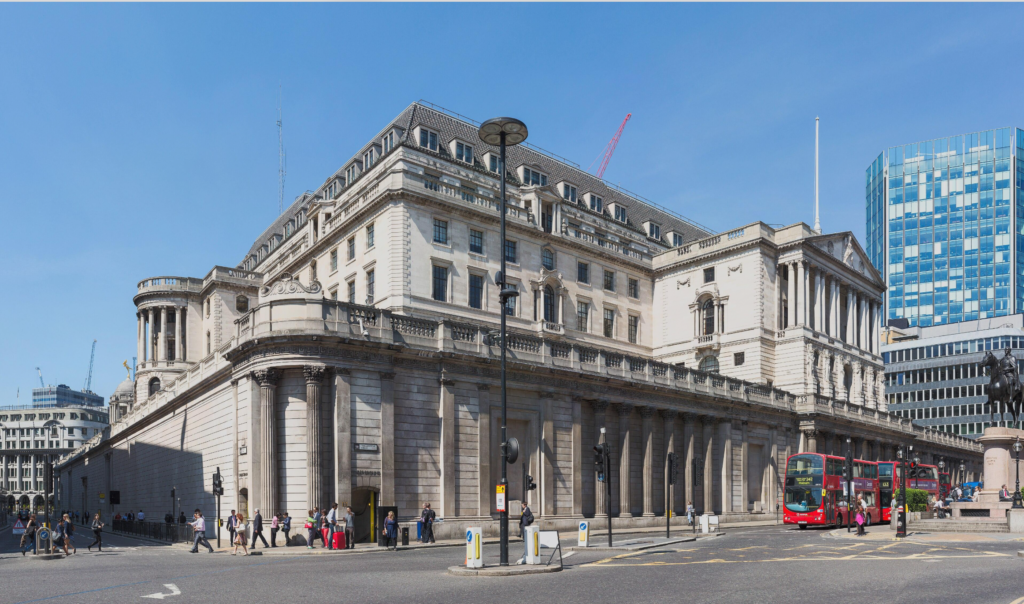
Several economic factors influence gilt yields.
Inflation
Inflation reduces the purchasing power of money.
If investors expect higher inflation, they may demand higher yields to compensate for the loss of purchasing power.
Bank of England Interest Rates
The Bank of England influences short-term borrowing costs through its monetary policy decisions.
Changes in its Bank Rate can affect gilt yields, particularly shorter-dated bonds.
However, long-term gilt yields also depend on expectations about future interest rates and other economic conditions.
Government Borrowing
When the UK Government needs to borrow more money, it may issue additional gilts.
The balance between supply and investor demand can influence bond prices and yields.
Economic Growth
Expectations about economic growth affect inflation, interest rates and investment demand.
Investor Confidence
Investors also consider the government’s fiscal position, political stability, currency outlook and ability to meet its financial obligations.
Therefore, government bond yields reflect much more than the current Bank of England interest rate.
Are UK Government Bonds Safe?
UK government bonds generally carry relatively low credit risk because the UK Government issues debt in its own currency.
However, this does not mean gilts are completely risk-free.
Investors face several risks.
Interest-rate risk: If market yields rise, existing fixed-rate gilt prices generally fall.
Inflation risk: Inflation can reduce the real purchasing power of fixed coupon payments.
Market risk: Investors who sell before maturity may receive less than their original investment.
Credit risk: Although UK government default risk is generally considered low, no issuer offers an absolute guarantee against every possible circumstance.
Currency risk: Investors measuring their wealth in a currency other than sterling face exchange-rate movements.
An investor who purchases a conventional gilt and holds it until maturity can normally expect the contractual redemption amount, assuming the government meets its obligations.
However, purchasing a bond above its redemption value can still result in a capital loss on redemption.
What Is a Hedge Fund?
A hedge fund is an investment business that pools money from investors and uses professional investment strategies to generate returns.
Hedge funds may invest in shares, bonds, currencies, commodities and financial derivatives.
Unlike many conventional investment funds, hedge funds may also use borrowing, short selling and leveraged financial contracts.
These strategies can increase potential profits but can also magnify losses.
What Is a Macro Hedge Fund?
A macro hedge fund focuses on major economic developments.
Its managers study inflation, central-bank decisions, currencies, government borrowing, international trade and economic growth.
For example, a macro hedge-fund manager may believe that UK inflation will fall faster than financial markets expect.
The manager might predict that investors will subsequently demand lower yields on UK government bonds.
If the manager expects gilt prices to rise, the fund may purchase gilts or establish positions through financial derivatives.
If the prediction proves correct, the fund may earn a profit.
If market conditions move in the opposite direction, the fund may lose money.
How Can a Hedge Fund Make £25 Million Trading Bonds?
Consider a simplified example.
A hedge fund has £100 million of investor capital.
Through borrowing or derivatives, it obtains £500 million of exposure to government bonds.
The fund manager believes bond prices will rise.
Suppose the value of that exposure increases by 5%.
The investment gain would be:
£500 million × 5% = £25 million
Relative to the fund’s original £100 million capital, this represents a 25% gross return.
However, leverage also increases risk.
If the position falls by 5%, the fund could lose £25 million instead.
Actual returns also depend on financing expenses, trading costs, collateral requirements and other positions.
This explains why successful hedge-fund managers require extensive knowledge of financial markets, mathematics, economics and risk management.
How Are UK Government Bonds Taxed?
UK taxpayers should understand the difference between coupon income and capital gains.
What Is the Accrued Income Scheme?
When investors buy or sell gilts between interest payment dates, part of the purchase price may reflect interest that has accumulated since the previous coupon payment.
HMRC’s Accrued Income Scheme can affect how this interest is taxed. The rules help prevent investors from converting taxable interest into capital proceeds.
The scheme does not apply to every transaction. Exemptions and special rules may apply depending on the investor’s circumstances and holdings.
Income Tax on Gilt Interest
Interest received from conventional UK gilts is generally subject to Income Tax.
The tax treatment depends on the investor’s circumstances, including the amount of taxable interest received and any available allowances.
Capital Gains Tax on Gilts
For individuals, gains arising from the disposal of conventional UK government gilts are generally exempt from Capital Gains Tax.
For example, suppose an individual purchases a conventional gilt for £8,000 and later sells it for £9,000.
The £1,000 capital gain will generally be exempt from CGT.
However, the interest payments remain subject to the applicable Income Tax rules.
Special rules can apply, including rules for accrued income, particular types of securities and investors trading through a business.
Holding Gilts Through an ISA or SIPP
Eligible gilts held within an Individual Savings Account (ISA) or Self-Invested Personal Pension (SIPP) can benefit from the relevant tax advantages of those arrangements.
Investors should consider their personal circumstances before selecting an investment structure.
Can Ordinary Investors Buy UK Government Bonds?
Yes. Government bonds are not exclusively available to banks, hedge funds or wealthy investors.
Individual investors can access UK gilts through investment platforms and stockbrokers that support gilt trading.
Some investors purchase individual gilts and hold them until maturity.
Others invest through funds that hold a portfolio of government bonds.
However, individual gilts and bond funds work differently.
An individual gilt has a specified maturity date and redemption amount, whereas a conventional open-ended bond fund normally does not promise to return a fixed principal amount on a particular date.
Investors should therefore understand the product, costs, risks and tax treatment before committing money.
Frequently Asked Questions About UK Government Bonds
Can I lose money investing in UK government bonds?
Yes. If you sell a gilt before maturity when its market price has fallen, you may incur a loss. You can also lose money in real terms if inflation exceeds your investment return.
Does the coupon change when the Bank of England cuts interest rates?
Not for a conventional fixed-rate gilt. Its contractual coupon remains unchanged. Index-linked gilts operate differently.
Why would someone pay more than £1,000 for a £1,000 bond?
Because the bond may offer attractive coupon payments compared with alternative investments. However, the investor must also account for the fact that the government will repay only the bond’s redemption value at maturity.
What is the difference between a coupon and a yield?
The coupon determines the contractual interest payment. The yield measures the investment return relative to the price paid and, depending on the calculation, may include future capital gains or losses.
Are gilts better than savings accounts?
Not necessarily. Savings accounts and gilts have different risks, protections, returns, tax considerations and withdrawal arrangements. The appropriate choice depends on the investor’s objectives and circumstances.
Can a hedge fund lose more money than it originally invested?
Leverage and derivatives can create substantial losses. Depending on the strategy and contractual arrangements, losses on particular positions can exceed the capital initially committed to those positions.
Conclusion
Understanding UK government bonds begins with three essential principles.
First, a conventional fixed-rate government bond promises specified coupon payments and repayment of its face value at maturity.
Second, the coupon rate and investment yield are not necessarily the same. The yield depends on the market price and the payments an investor expects to receive.
Third, bond prices and market yields generally move in opposite directions.
When investors require lower yields, existing fixed-rate bonds usually become more valuable. When investors demand higher yields, those bonds generally lose market value.
These relationships help explain movements in UK gilt markets and the investment strategies used by professional bond traders and macro hedge funds.
For individual investors, understanding these principles can support better decisions about savings, retirement planning and investment risk.
Important: This article provides general financial and tax information, not personal investment advice. Investment values can rise or fall, and tax treatment depends on individual circumstances. Seek advice from an appropriately FCA-authorised financial adviser before making investment decisions.
Online Tax Services by eTaxFiling.co.uk
- etaxfiling.co.uk is a leading UK tax advisory platform.
- We specialise in inheritance tax, non-dom rules, and international tax planning.
- Our team supports individuals, families, and businesses with clear, proactive guidance.
- From HMRC enquiries to long-term wealth strategies, we provide practical solutions tailored to every client.
Looking for professional accounting or tax advice? At Adam Accountancy, our experienced accountants in Slough provide reliable support to individuals, contractors and businesses across the UK.
Call us on 01753 373 505 for a free, no-obligation initial consultation, or contact us using our online form, and our team will be happy to assist you.