In the UK, the issue of paying someone who is not VAT registered comes up in various business scenarios. It’s essential to understand how VAT works and how businesses can manage payments for services or goods provided by individuals or entities that are not VAT registered.
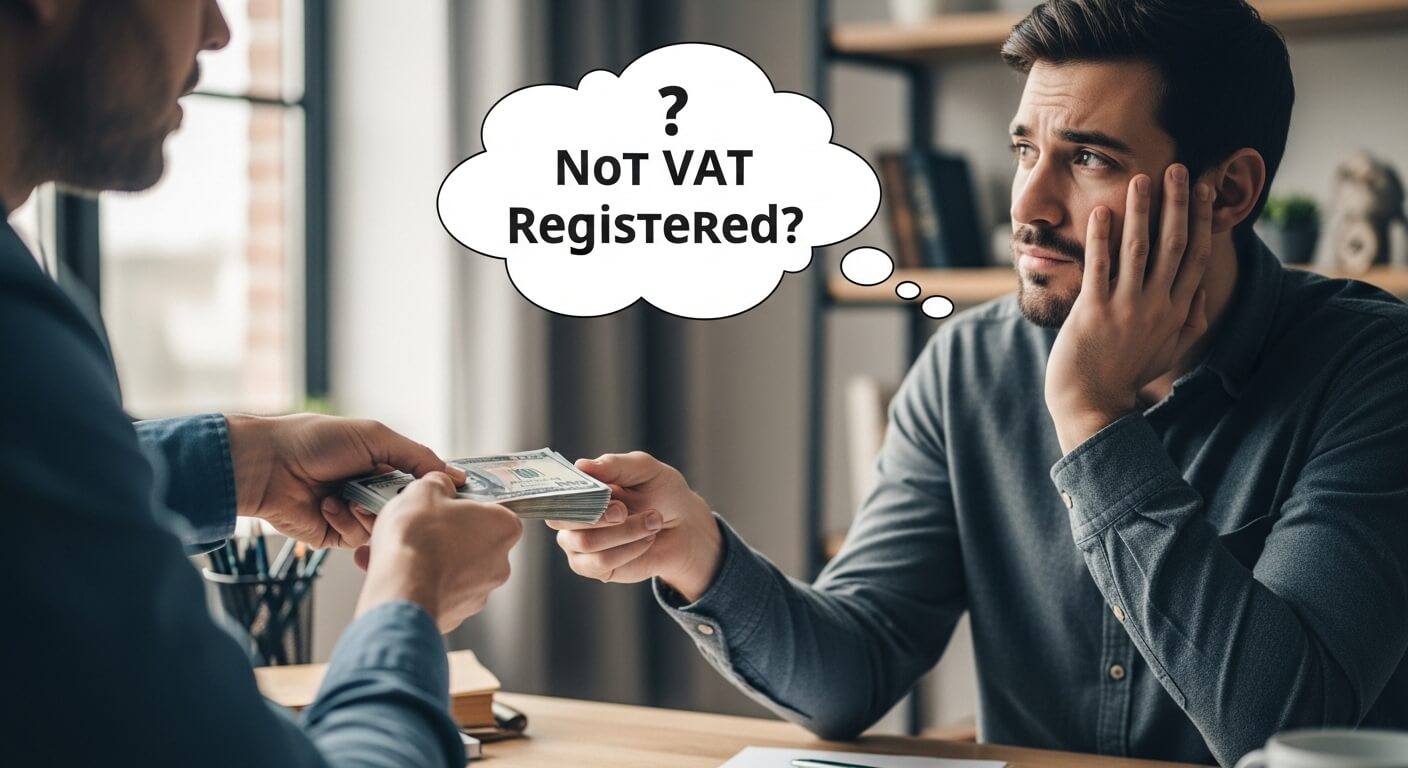
This guide will dive into everything you need to know about paying someone who is not VAT registered, VAT registration, and how this affects your business transactions. Whether you’re a small business owner or managing a limited company, knowing the rules surrounding VAT registration will save you time and prevent costly mistakes.
What Does VAT Registered Mean?
VAT, or Value Added Tax, is a tax on the value added to goods and services at each stage of production or distribution. Businesses must register for VAT with HMRC if their taxable turnover exceeds a certain threshold. As of 2023, this threshold is £85,000 per year.
Being VAT registered means that the business is authorized to charge VAT on its sales and claim VAT back on its purchases. However, if someone is not VAT registered, they are not permitted to charge VAT, and they cannot claim back any VAT they have paid on business-related purchases.
1. Paying Someone Who Is Not VAT Registered: What You Need to Know
When you are paying someone who is not VAT registered, it has a direct impact on how you manage the financial aspects of the transaction. If the individual or business is not VAT registered, they cannot charge VAT on their invoices. Therefore, you do not need to worry about adding VAT on top of their payment.
Key Points:
- No VAT is added to the invoice.
- No VAT reclaim on any expenses related to the transaction.
- You may not deduct VAT from the payment.
However, you must ensure that the person or business you are paying has confirmed that they are not VAT registered. If in doubt, you can ask for their VAT registration status or check it with HMRC.
2. What Is the VAT Registration Threshold?
The VAT registration threshold is the amount of taxable turnover a business must have before it is required to register for VAT. For most businesses in the UK, this threshold is £85,000 annually. If your turnover is below this limit, you do not need to register for VAT.
- Over £85,000 – VAT registration is mandatory.
- Under £85,000 – VAT registration is optional.
Why Does This Matter for Paying Someone Who Is Not VAT Registered?
If someone’s taxable turnover is below the threshold, they are not required to be VAT registered. This means they cannot charge VAT on their invoices. Therefore, when paying someone who is not VAT registered, you should pay the agreed amount without any additional VAT being added.
3. Can You Charge VAT If Not Registered?
A common question is whether you can charge VAT if you’re not VAT registered. The answer is no. If you are not VAT registered, you are not legally allowed to charge VAT on your goods or services, even if you have a high turnover. Charging VAT without being registered can lead to penalties from HMRC.
Key Points:
- Not VAT registered means you cannot charge VAT.
- You must register for VAT if your turnover exceeds the threshold.
If you are a small business owner or a sole trader with a turnover under the VAT registration threshold, you can choose not to register for VAT. This might make your services more attractive to non-VAT registered clients.
4. Does a Sole Trader Pay VAT?
As a sole trader, you are responsible for managing your tax obligations. One of the most common questions for sole traders is whether they need to pay VAT. A sole trader is required to pay VAT only if their turnover exceeds the VAT registration threshold of £85,000. If your turnover is below this amount, you are not required to pay VAT.
Key Considerations for Sole Traders:
- Under £85,000 turnover: No VAT registration required.
- Over £85,000 turnover: Must register for VAT and pay VAT on sales.
Even if you are not VAT registered, it’s important to keep accurate records of your income and expenses, especially if you are a sole trader or a small business owner. Consulting a chartered accountant Berkshire or a small business accountant can help ensure you comply with tax rules.
5. Who Pays VAT?
In the context of paying someone who is not VAT registered, it’s essential to understand who pays VAT. VAT is typically paid by the consumer of the goods or services. If a business is VAT registered, they charge VAT on the sales of goods or services and remit this VAT to HMRC.
Key Points:
- VAT is paid by the customer when purchasing VAT-registered goods or services.
- VAT is not charged if the business is not VAT registered.
Therefore, when you’re paying someone who is not VAT registered, there is no VAT involved in the transaction.
6. Does a Business Pay VAT?
Businesses are required to pay VAT on the goods and services they purchase, but they can reclaim this VAT if they are VAT registered. A VAT-registered business charges VAT on its sales, and the VAT paid on purchases is known as input tax.
Key Points:
- VAT registered businesses charge VAT on their sales (output tax).
- They can reclaim VAT on business expenses (input tax).
- If a business is not VAT registered, no VAT is charged on sales, and no VAT is reclaimed on expenses.
When paying someone who is not VAT registered, you do not need to worry about reclaiming VAT. The payment is straightforward and does not involve VAT.
7. How to Manage Payments to Someone Who Is Not VAT Registered
When paying someone who is not VAT registered, there are a few steps you should take to ensure everything is in order.
- Ask for Confirmation: Always confirm that the person or business is not VAT registered. This can be done by asking them directly or verifying their status through HMRC.
- Check the Invoices: Ensure that the invoices you receive from the non-VAT registered individual or business do not include VAT.
- Maintain Accurate Records: Keep records of all payments and invoices for tax purposes. This is crucial if you are filing for self-assessment or handling any other tax-related documentation.
- Consult an Accountant: If you’re unsure about the VAT implications of paying someone who is not VAT registered, consider consulting a VAT accountant or a small business accountant to ensure you are in compliance with UK tax laws.
8. Common Mistakes When Paying Someone Who Is Not VAT Registered
There are several common mistakes businesses make when paying someone who is not VAT registered. These include:
- Confusing VAT registration status: Always verify whether the supplier is VAT registered or not.
- Incorrect invoicing: Make sure that the supplier knows not to include VAT if they are not VAT registered.
- Failure to keep proper records: Not maintaining accurate records can lead to issues during an audit or when submitting self-assessment tax returns.
By working with a self-assessment accountant, you can ensure your tax records are in order and compliant.
Frequently Asked Questions (FAQs)
- What happens if I pay someone who is not VAT registered?
You do not need to pay VAT on their invoices. The amount you pay is the agreed price, with no VAT added.
- Can I still claim VAT if the supplier is not VAT registered?
No. If the supplier is not VAT registered, there is no VAT to reclaim.
- How do I know if someone is VAT registered?
You can ask the individual or business for confirmation or check their VAT registration status with HMRC.
- Can I charge VAT if I am not VAT registered?
No. Only VAT-registered businesses can charge VAT on their sales.
- What is the VAT registration threshold?
The threshold for VAT registration in the UK is £85,000 of taxable turnover in a 12-month period.
- Do sole traders need to pay VAT?
A sole trader only needs to pay VAT if their taxable turnover exceeds £85,000. If below this threshold, VAT registration is not mandatory.
- What are the benefits of being VAT registered?
VAT registration allows you to reclaim VAT on purchases and increase your credibility with larger businesses.
- Do businesses need to pay VAT on all sales?
VAT is paid on most goods and services sold by VAT-registered businesses. However, certain goods and services may be exempt or zero-rated.
- Can I reclaim VAT on purchases from a non-VAT registered supplier?
No. VAT can only be reclaimed on purchases from VAT-registered suppliers.
- How can I find a VAT accountant to help my business?
You can search for a VAT accountant in your area or consult a small business accountant who can help with VAT matters.
- Are there any exceptions to the VAT registration threshold?
Yes, there are exceptions for businesses involved in certain sectors or those that voluntarily choose to register for VAT.
- What if I accidentally charge VAT when I’m not registered?
You could face penalties and fines from HMRC for improperly charging VAT. Always ensure that you’re in compliance with VAT rules.
- Can I register for VAT voluntarily?
Yes, businesses with a turnover under the threshold can register for VAT voluntarily if they wish to reclaim VAT on purchases.
- What is the penalty for not registering for VAT?
Failing to register for VAT when required can result in penalties, including fines based on the amount of tax you should have paid.
- Do I need to file VAT returns if I’m not VAT registered?
If you’re not VAT registered, you do not need to file VAT returns.
- How can I ensure I’m compliant with VAT laws?
Consult a chartered accountant Berkshire or a small business accountant who can guide you through VAT registration and compliance.
- What is the VAT rate in the UK?
The standard VAT rate in the UK is 20%, but there are reduced rates for certain goods and services.
- Can I get advice on property tax if I’m not VAT registered?
Yes, consult a property tax advisor or landlord accountants for advice on property tax, even if you’re not VAT registered.
- How do I calculate VAT on sales?
VAT is calculated as a percentage of the sale price. If you’re VAT registered, you charge VAT on your sales and can reclaim VAT on purchases.
- Do I need a VAT number to do business internationally?
Yes, if you sell goods or services outside the UK and need to charge VAT, you must be VAT registered.
- Is there VAT on supermarket food in the UK?
Most supermarket food is exempt from VAT in the UK, with some exceptions such as hot food or certain beverages.
- Can VAT affect my business’s cash flow?
Yes, VAT can affect your business’s cash flow as you have to pay VAT on purchases before claiming it back.
- Do limited companies need to pay VAT?
If a limited company’s turnover exceeds the VAT threshold, it must register for VAT and pay VAT on sales.
- What should I do if I make a mistake on a VAT return?
If you make a mistake on your VAT return, you must correct it and submit an amended return to HMRC.
- How do I avoid VAT mistakes in my business?
Consult a VAT accountant or a small business accountant regularly to ensure your VAT processes are accurate.
- Can I use online tax services for VAT issues?
Yes, online tax services can help with VAT registration, returns, and advice on VAT-related matters.
- What is the difference between VAT and corporation tax?
VAT is a consumption tax, while corporation tax is paid by businesses on their profits.
- Can VAT affect my personal tax?
VAT does not directly affect your personal tax, but if you’re a business owner, it impacts how you handle business transactions.
- Should I hire accountants in Slough for VAT help?
Yes, hiring accountants in Slough can help you navigate VAT registration and compliance. They can ensure your business stays VAT-compliant.
- What should I do if I’m unsure about VAT registration?
If you are unsure about whether to register for VAT, consult a small business accountant or VAT accountant for professional advice.
Conclusion
In conclusion, paying someone who is not VAT registered is a straightforward process that requires understanding the basics of VAT rules and regulations. When engaging with individuals or businesses that do not have VAT registration, you simply need to ensure that no VAT is charged or reclaimed during the transaction. It’s essential to verify their VAT status and keep proper records for future tax purposes.
Understanding key concepts like the VAT registration threshold, the differences between VAT registered and non-VAT registered businesses, and knowing whether a sole trader needs to pay VAT can help you navigate business payments and ensure compliance.
If you’re ever in doubt, consulting a small business accountant, VAT accountant, or self-assessment accountant can provide clarity and save your business from potential pitfalls. Whether you’re managing a small business or a larger entity, ensuring that you pay someone who is not VAT registered correctly will keep your operations smooth and legally compliant.
For expert advice on VAT, property tax, and other business financial matters, consider reaching out to professionals like chartered accountants Berkshire or accountants in Slough. Their expertise can help you make well-informed decisions that support the long-term success of your business.
With the proper knowledge and resources, you can avoid common mistakes, maintain proper records, and focus on growing your business without worrying about VAT issues.
To discuss how Accountants in Slough can assist you with your Accounts Preparation, please contact us for a free, no obligation consultation on: 0333 772 1616 or complete our Contact form and we will get back to you.