Sole Trader Tax
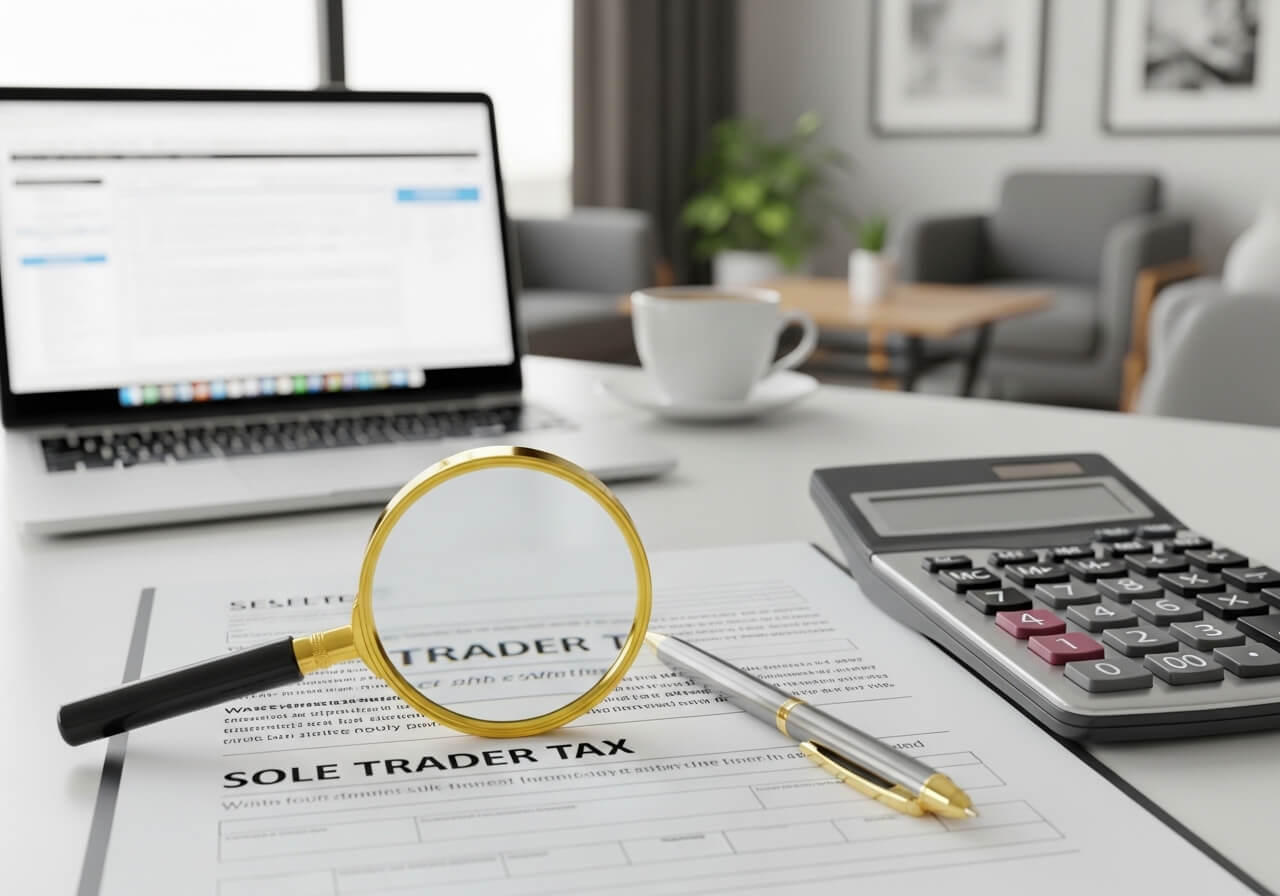
Starting out as a sole trader is often the fastest way to build a business in the UK. It is simple to begin, flexible to manage, and attractive for freelancers, tradespeople, consultants, creators, landlords with side activity, and many small service providers.
The challenge begins when income grows and tax becomes more serious. Many business owners know how to sell, deliver, and build relationships, but they do not always understand how their profit becomes taxable income or how HMRC expects them to report it.
This guide from Adam Accountancy explains the full picture in a clear and practical way. It is written for a UK audience and focuses on real issues that matter in day to day business life.
You will learn how registration works, how profit is calculated, what counts as an allowable expense, when VAT matters, how Self Assessment fits in, and when it makes sense to get professional help from a small business accountant or self assessment accountant.
The guide also covers wider support areas such as bookkeeping accountants, payroll services, online tax services, and specialist advice where your situation becomes more complex.
What Sole Trader Means in the UK
A sole trader is a person who runs a business as an individual. There is no separate legal company. The owner and the business are treated as the same person for most tax purposes.
This is why sole trader tax is based on the owner’s business profit and not on a separate company’s profit. The money you earn through your work is added into your personal tax position through Self Assessment.
A sole trader can begin trading immediately. In the UK, you usually need to register for Self Assessment if your gross self employed income is more than £1,000 in a tax year. That rule comes from HMRC’s registration guidance and trading allowance rules.
This structure is popular because it is easy to understand at the beginning. There is less admin than a limited company, fewer legal formalities, and a direct link between the business and the owner.
The downside is that many people underestimate their obligations. Once the business grows, proper records, tax planning, and filing discipline become essential.
Why Sole Trader Tax Matters From Day One
Many people only think about tax at the end of the year. That is one of the biggest mistakes a new business owner can make.
If you ignore sole trader taxation in the early months, you can easily spend money that later belongs to HMRC. You may feel profitable, yet still be short of cash when the tax bill arrives.
Good planning protects your cash flow. It also helps you price your work correctly, save enough during the year, and avoid last minute panic.
The real value of understanding sole trader taxes is not just legal compliance. It helps you make better business decisions. When you know what percentage of your profit may go to tax and National Insurance, you set better rates, manage costs more carefully, and take growth decisions with more confidence.
At Adam Accountancy, we often see business owners improve quickly once they understand that tax is not a surprise event. It is an ongoing business cost that should be managed every month.
That mindset shift usually separates stressed traders from organized ones.
Who Needs to Register as a Sole Trader
You can begin working for yourself without waiting for formal incorporation. However, HMRC says you must register for Self Assessment as a sole trader if your gross income from self employment is more than £1,000 in a tax year. You can also register earlier if you want to.
That point matters for side hustles, freelance work, delivery income, online selling, tutoring, trades, consulting, and many forms of casual business activity.
A simple way to think about it is this:
- If you are earning regularly from your own work
- If clients are paying you directly
- If you control how the work is done
- If the activity is commercial rather than casual
- You may well be trading
Many people delay registration because the business still feels small. HMRC does not measure seriousness by how big the business feels. It looks at income, business activity, and reporting duties.
This is one reason UK sole trader tax should be understood early. A business that starts as a side project can become taxable sooner than expected.
If you are unsure, speaking to a self assessment accountant early is usually cheaper than fixing mistakes later.
The Difference Between Turnover and Profit
One of the most important concepts in tax for sole trader planning is the difference between turnover and profit.
Turnover is the total money your business receives before expenses. Profit is what remains after you deduct allowable business costs.
Tax is usually based on profit, not on the total amount that entered your business bank account. That is good news, but only if your records are accurate.
For example, if you invoice £50,000 in a year, that does not mean you pay tax on £50,000. If your allowable expenses are £12,000, your taxable business profit may be much lower.
This is where many people make mistakes. They confuse bank balance with profit. They treat every incoming payment as personal income. Then they either overspend or underestimate their future liabilities.
Understanding this difference is central to tax for sole traders because your prices, budgeting, and savings all depend on it.
A proper record of income and expenses is not just admin. It is the foundation of correct tax reporting and sensible financial control.
How HMRC Looks at Sole Trader Income
HMRC treats sole trader income as part of your personal tax position. This means your self employed profit is considered alongside any other taxable income you may have.
That could include employment income, rental income, savings income, or other taxable receipts depending on your circumstances.
This is why sole trader tax uk planning should not happen in isolation. A person with only self employed profit may face one tax picture, while someone with a salary and side business may face another.
Your tax result depends on the whole picture. The same business profit can produce different outcomes for different people because their wider income profile is different.
HMRC’s current tax year for the rates shown in this article runs from 6 April 2025 to 5 April 2026. The standard Personal Allowance is £12,570, though that can reduce once income goes above £100,000.
That is why tax planning is not just about looking at your invoices. It is about understanding how your total taxable income fits together across the year.
Your First Sole Trader Setup Checklist
A clear setup process makes tax sole trader compliance much easier. Many headaches start because basic foundations were skipped.
Use this simple checklist early:
- Choose a business name that fits HMRC rules
- Keep a separate business bank account if possible
- Save digital copies of invoices and receipts
- Track money in and money out from day one
- Register for Self Assessment when required
- Put money aside regularly for tax
- Review whether VAT registration may matter later
- Decide whether to use software or spreadsheets
This is also the point where many traders benefit from support from bookkeeping accountants or online tax accountants. A clean setup saves hours of repair work later.
If you expect to grow quickly, planning early with Adam Accountancy can help you choose the right systems from the start. The goal is not just filing a return. The goal is building a business that stays organised, compliant, and scalable.
A strong setup gives you better numbers, clearer decisions, and lower stress throughout the year.
The Trading Allowance and Small Side Income
The UK tax system includes a trading allowance that gives many people a useful starting point. HMRC explains that the first £1,000 of self employment income may be covered by the trading allowance, depending on your circumstances.
This matters for people with occasional side income, but it does not remove the need to think carefully about records and thresholds.
If your business activity is growing, relying on a rough understanding of the allowance can create confusion. Some people think it means all small business income is tax free. That is not correct.
The trading allowance may be relevant if your gross income is low, but once your business grows beyond that level, registration and reporting obligations become much more important.
This is where sole trader taxation becomes more practical than theoretical. Small side income may be simple. A growing business needs proper systems.
A sensible approach is to treat even early stage income seriously. Keep records, save receipts, and know when your activity has moved beyond hobby level into genuine trade.
That discipline will make future filing much easier.
How Sole Trader Tax Is Calculated
The core process behind sole trader tax is straightforward in principle, even if the details can become complex in real life.
The basic formula looks like this:
- Add up your business income
- Deduct allowable business expenses
- Work out your taxable profit
- Apply Income Tax rules
- Add any National Insurance due
- Consider payments on account if relevant
That is the foundation of sole trader taxes in the UK. The tax system is profit based, not turnover based, and that is why expenses matter so much.
The tricky part is not the formula itself. The tricky part is getting the numbers right. Business owners often miss receipts, mix personal and business spending, or claim things that are not clearly allowable.
Another common issue is timing. Some costs belong in one tax year while others belong in another. If records are weak, the final return becomes harder to prepare correctly.
A small business accountant or online tax services provider can help by turning rough business records into clean year end numbers.
Income Tax Basics for Sole Traders
Once you know your taxable profit, you then look at Income Tax. For the 2025 to 2026 tax year, the standard Personal Allowance is £12,570. For most taxpayers in England, Wales, and Northern Ireland, the main rates then rise through basic, higher, and additional bands.
This is where the sole trader tax rate question becomes important. There is no single flat sole trader rate in the UK.
Instead, your tax depends on how much taxable profit you make and how that profit interacts with your other income.
Many new traders ask for one percentage they can save every month. That is understandable, but the reality is more layered. Your eventual rate may be influenced by your Personal Allowance, your total profit, and whether you have any other taxable income.
A practical rule is to save consistently rather than guess too aggressively. Monthly saving builds discipline and gives you room to handle the bill when it arrives.
Knowing the structure is far more useful than memorising one number.
Personal Allowance and Why It Matters
The Personal Allowance is one of the most important concepts in uk sole trader tax planning. HMRC states that the standard allowance for the 2025 to 2026 tax year is £12,570. That is the amount of income many taxpayers can receive before paying Income Tax, though it can reduce for those with income above £100,000.
For a sole trader, this allowance can reduce the Income Tax due on business profits. However, it does not mean every trader below that figure has no tax related duties at all. National Insurance and reporting rules may still matter depending on profit levels and circumstances.
This is why tax for sole traders should always be looked at in the round. Income Tax is only one part of the picture.
If you also have employment income, your Personal Allowance may already be used elsewhere. In that case, your self employed profit could be taxed sooner than expected.
That is why good planning is personal. Two traders with the same business profit can face different outcomes depending on the rest of their income profile.
Understanding the Main UK Tax Bands
For much of the UK, the main Income Tax structure after the Personal Allowance is a basic rate band, then a higher rate band, then an additional rate band. For England, Wales, and Northern Ireland in the 2025 to 2026 tax year, the basic rate is 20 percent on taxable income up to £37,700 above the allowance, the higher rate is 40 percent up to £125,140, and the additional rate is 45 percent above that. Scotland has different non savings income bands.
This matters when people ask about the sole trader tax rate. There is not one sole trader rate because the UK system taxes slices of income at different rates.
That means effective tax and marginal tax are not the same thing. You may hear someone say they are in the higher rate band, but that does not mean all their income is taxed at 40 percent.
Understanding this makes pricing and profit targets more realistic. It also helps reduce panic when your business grows and your tax position becomes more layered.
A professional review from a chartered accountant Berkshire business owners trust can be especially useful once your income begins moving into higher bands.
National Insurance for Sole Traders
Income Tax is only part of the answer. Sole trader taxes also include National Insurance in many cases.
HMRC says that if your profits are more than £12,570 for the 2025 to 2026 tax year, you must pay Class 4 National Insurance. The current Class 4 rates are 6 percent on profits over £12,570 up to £50,270 and 2 percent above £50,270. HMRC also explains that if your profits are £6,845 or more, Class 2 contributions are treated as paid to protect your National Insurance record.
This is a major reason why sole trader tax uk calculations can surprise people. They focus on Income Tax and forget National Insurance.
National Insurance matters for more than just cost. It can also affect access to certain state benefits and your State Pension record.
That is why your tax estimate should include both Income Tax and National Insurance, not just one.
It is also why saving a regular percentage of profit is smarter than reacting only when the tax return is done.
Why the Sole Trader Tax Rate Is Not One Flat Number
Many business owners ask a fair question: what is the sole trader tax rate?
The honest answer is that it depends. Your final rate is shaped by your taxable profit, your other income, your Personal Allowance position, and the addition of National Insurance.
That means one trader may pay no Income Tax at all, another may pay mostly at basic rate, and another may have part of their profits in higher rate territory.
This is why fixed online guesses are often misleading. They ignore the things that change real tax results.
A better approach is to think in layers:
- your tax free allowance
- your taxable business profit
- your National Insurance exposure
- your total income position
- any payments on account
That layered view is much more useful for tax sole trader planning than chasing one universal percentage.
At Adam Accountancy, we usually recommend estimating tax from real numbers every quarter rather than relying on guesswork. That creates better cash flow discipline and fewer shocks at year end.
Payments on Account Explained
Payments on account cause confusion for many sole traders. HMRC describes them as advance payments towards your next tax bill, including Class 4 National Insurance if you are self employed. Each payment is usually half of the previous year’s liability, and the two payments are normally due on 31 January and 31 July.
This is where tax for sole trader planning becomes serious. In your first significant year, the amount due can feel much bigger than expected because you may pay:
- the balancing payment for the finished tax year
- the first payment on account for the next year
That is why people sometimes describe the first big tax bill as a shock. It is not always just one year of tax. It can include part of the next year as well.
If you expect lower profits in the following year, HMRC allows you to apply to reduce payments on account. That should be done carefully and honestly, because reducing them too far can create interest or further issues.
Understanding this system is essential for uk sole trader tax budgeting.
Key HMRC Deadlines You Must Know
Deadlines are a major part of sole trader taxation. HMRC says you must tell them by 5 October if you need to complete a tax return for the previous year and have not filed one before or had stopped filing previously. Paper returns are due by 31 October, while online returns are due by 31 January. Tax due is also generally payable by 31 January.
These dates matter more than many traders realise. A profitable business can still run into trouble if it files late or pays late.
Here is the simple version:
- Tax year ends on 5 April
- Register by 5 October if needed
- File paper return by 31 October
- File online return by 31 January
- Pay the bill by 31 January
- Pay second payment on account by 31 July if due
A calendar reminder is good. A proper tax process is better.
Missing deadlines is rarely about intelligence. It is usually about weak systems, poor records, or avoiding the numbers until it is too late.
Penalties for Late Filing and Late Payment
Late action can become expensive. HMRC publicly reminds taxpayers that missing the Self Assessment deadline may trigger an automatic £100 late filing penalty, and the 31 January payment date is also critical.
Penalties hurt in two ways. First, they cost money directly. Second, they usually arrive at the exact moment your business already feels financially stretched.
A late return can also create wider stress. You may not know what you owe, may not be able to budget properly, and may spend more time dealing with admin than serving customers.
A strong sole trader tax uk process reduces this risk. That means:
- keeping records monthly
- reconciling bank activity regularly
- reviewing your profit before year end
- preparing for the filing season early
- not waiting until January
Many businesses do not fail because of tax. They struggle because tax admin drains time, focus, and cash. Prevention is much cheaper than recovery.
What Records a Sole Trader Should Keep
Record keeping is the practical backbone of sole trader taxes. Without clear records, even a simple business can become hard to report accurately.
At minimum, a sole trader should keep records of:
- sales invoices
- bank statements
- receipts for expenses
- mileage or travel logs where relevant
- software subscriptions
- supplier bills
- loan or finance records if used for business
- VAT records if registered
You should also keep notes that explain unusual transactions. A clear memo today can save a long explanation later.
Good records are useful for more than filing. They tell you whether the business is actually improving, which clients are profitable, and where money leaks are happening.
This is why bookkeeping accountants can add real value. They do not just record history. They help turn financial activity into usable management information.
Strong records also make any future work with a VAT accountant, self assessment accountant, or lending provider much smoother.
Bookkeeping Is a Tax Tool, Not Just Admin
Many people see bookkeeping as dull admin. In reality, it is one of the most powerful tax control tools a small business has.
Clean books help you estimate liabilities early. They also reduce the risk of underclaiming or overclaiming expenses.
When your records are updated regularly, you can see your true profit trend. That makes tax for sole traders more predictable and far less stressful.
The benefits of good bookkeeping include:
- clearer cash flow
- faster year end preparation
- fewer missing receipts
- stronger evidence for expense claims
- better budgeting for tax
- easier discussions with lenders or advisers
A growing business often reaches a point where DIY bookkeeping stops being efficient. That is when working with bookkeeping accountants or online tax accountants becomes a business decision, not a luxury.
Adam Accountancy supports sole traders who want a practical balance between control and simplicity. Some clients want full support. Others want systems they can mostly run themselves. Both approaches can work if the structure is sound.
Allowable Expenses and Why They Matter
Allowable expenses reduce taxable profit. That means they are central to sole trader taxation and one of the biggest reasons accurate records matter.
HMRC says self employed people may claim costs such as office expenses, travel, staff costs, stock, financial costs, and business premises costs where they are incurred for the business. HMRC also confirms that accountancy and other professional fees for business reasons can count as allowable expenses.
This does not mean every cost linked loosely to work is automatically allowed. The basic rule is that the expense must be genuinely for the business.
If you fail to claim legitimate expenses, you may overpay tax. If you claim personal costs as business expenses, you risk problems later.
That is why professional guidance can save money in both directions. It helps you claim what is valid without becoming careless.
A strong expense process is one of the simplest ways to improve your sole trader tax outcome legally and confidently.
Office Costs and Day to Day Running Costs
Office costs are common and usually straightforward. HMRC lists items such as stationery and phone bills among allowable office expenses, along with business related property and utility costs where relevant.
Typical office related expenses may include:
- stationery
- printer ink
- software subscriptions
- cloud storage
- work phone costs
- internet used for business
- postage
- business insurance
The important point is business purpose. If a cost is partly personal and partly business, only the business portion is usually claimable.
This is where many new traders go wrong. They either claim too little because they are overly cautious, or too much because they assume everything linked to work is allowed.
A smart tax sole trader approach is to separate business spending as much as possible. A dedicated business account and a clean record system make it easier to justify the business share of a cost.
This also makes year end work faster for your small business accountant.
Working From Home and Home Office Claims
Working from home is now common for freelancers, consultants, creators, coaches, and online businesses. HMRC allows sole traders to claim certain home related costs where part of the home is used for business. HMRC also offers simplified expenses in some cases instead of complex actual cost calculations.
This can include part of your:
- electricity
- heating
- internet
- rent or mortgage interest apportionment issues in some cases
- council related running costs where appropriate for business use
The key is reasonableness and evidence. You should be able to explain how the business share was worked out.
Some traders prefer the simplicity of flat rate style methods where available. Others use actual cost apportionment. The best option depends on the size and nature of the claim.
For many home based businesses, this is a small but worthwhile part of sole trader taxes planning. Ignoring it may mean paying more tax than necessary.
Travel Costs and Vehicle Use
Business travel can often be claimed, but it must relate to business activity rather than normal private commuting. HMRC’s allowable expense guidance includes travel costs such as fuel, parking, train, and bus fares, subject to the rules.
Examples of potentially allowable travel include:
- visiting clients
- travelling to temporary work locations
- going to a supplier
- attending a conference
- business parking
- train fares for business meetings
Everyday travel between home and a regular permanent workplace is a more sensitive area and should be reviewed carefully.
Vehicle claims often become messy because personal and business use are mixed. Mileage logs are essential if you want a clean and defensible claim.
This is one area where good records make a major difference to tax for sole trader accuracy. A guess at the end of the year is weaker than a running log during the year.
If vehicle use is significant, your self assessment accountant can help you decide the most sensible method.
Clothing, Uniforms, and Common Expense Errors
Clothing is one of the most misunderstood expense categories. HMRC says that uniforms, protective clothing, and costumes for performers may be allowable, but everyday clothing is not allowed even if worn for work.
This catches many people out. They assume smart clothes count because they are used during business activity. HMRC’s rule is stricter than that.
This is a useful reminder that sole trader taxes are not based on personal logic alone. They depend on tax rules and evidence.
Other common expense mistakes include:
- claiming meals that are personal rather than business related
- mixing family costs into business costs
- claiming personal subscriptions as business costs
- forgetting to separate private use from business use
- keeping no supporting receipts
A disciplined approach protects you in both directions. It helps you avoid overclaiming, but it also helps you avoid underclaiming genuine costs through poor record keeping.
Stock, Materials, and Cost of Sales
If your business buys goods to sell, raw materials to create products, or direct job materials to deliver services, these costs are often central to your tax calculation.
Examples may include:
- stock for resale
- packaging
- raw materials
- tools consumed in the job
- subcontractor costs
- direct production supplies
HMRC includes things you buy to sell and staff or subcontractor related costs within the general area of allowable business expenses for the self employed.
This matters because gross income alone tells you very little about real profitability. A trader with high sales but high material costs may have a modest taxable profit. Another trader with low overhead service work may keep a much larger share.
This is one reason sole trader tax rate conversations should always be tied to profit, not just revenue.
Businesses with stock often need more structured bookkeeping than pure service businesses. That is where bookkeeping accountants and proper software can add real value.
Professional Fees and Financial Costs
Many sole traders are surprised to learn that professional fees can themselves be allowable where they are incurred for business reasons. HMRC confirms that accountancy, legal, and other professional fees can count as allowable business expenses in appropriate cases.
This can include fees for:
- accountants
- solicitors for business matters
- surveyors for business purposes
- professional indemnity insurance
- bank charges linked to the business
This is important because paying for advice is not always just a cost. It can be a route to stronger compliance, cleaner records, and better tax outcomes.
A VAT accountant, small business accountant, or self assessment accountant may help you save more than their fee simply by improving your systems and reducing mistakes.
From a tax for sole traders perspective, professional fees should be viewed as part of the infrastructure of a serious business.
The cheapest option is not always the best option. Poor advice, missed deadlines, or weak records often cost more than proper support.
Capital Allowances and Business Assets
Some business purchases are not treated the same way as everyday running costs. HMRC explains that capital allowances let businesses deduct some or all of the value of qualifying items such as equipment, machinery, and certain business vehicles from profits before tax. In many cases, full deduction may be available through the Annual Investment Allowance.
This matters when you buy longer term assets such as:
- computers
- office equipment
- machinery
- tools
- vans used for business
These are not always handled the same way as normal expenses like software or stationery.
Understanding capital allowances can improve your sole trader tax position in a perfectly legitimate way. It can also stop you from claiming something incorrectly.
Asset heavy businesses often benefit from expert help here because the rules can become more detailed when assets are sold, partly private, or grouped in different ways.
Simplified Expenses and the Cash Basis
HMRC allows simplified expenses in some situations, using flat rates instead of detailed actual cost calculations. HMRC also notes that sole traders and certain partnerships can use simplified expenses and may use the cash basis where appropriate.
This can be attractive for smaller businesses that want simplicity. The benefit is less admin. The downside is that simplified methods are not always the most tax efficient for every trader.
A good decision depends on your business pattern. If actual costs are high and well documented, detailed claims may be better. If the business is small and admin time is limited, simplified methods may feel more practical.
This is one of those areas where sole trader taxation is not just about what is allowed. It is about choosing the most sensible approach.
An experienced online tax accountants team can help compare simplicity against tax efficiency without overcomplicating the decision.
VAT Basics for Sole Traders
Not every sole trader needs VAT registration, but every sole trader should understand when it matters.
VAT is different from Income Tax and National Insurance. It is a tax on certain goods and services, not directly a tax on your profit. However, it still affects pricing, administration, and cash flow.
For many traders, VAT becomes relevant when the business grows. For others, voluntary registration may make sense earlier depending on their customers and cost structure.
The practical effect of VAT can be significant:
- you may need to add VAT to invoices
- you may be able to reclaim VAT on some purchases
- your pricing may look different to customers
- your record keeping obligations increase
This is why sole trader tax uk planning should not ignore VAT. Even if you are not registered yet, you should know when you may need to act.
A VAT accountant can be especially useful where your turnover is rising quickly or your industry has more complex VAT rules.
The VAT Registration Threshold
The current VAT registration threshold is more than £90,000 of taxable turnover. HMRC says you must register if your taxable turnover for the last 12 months goes over that threshold, and registration must usually happen within 30 days of the end of the month in which you exceeded it. The effective date then follows HMRC’s rules.
This matters because many growing businesses watch profit but forget turnover. VAT registration is triggered by taxable turnover, not profit.
A business with strong sales but thin margins may still need to register. That can change pricing strategy overnight.
This is one reason sole trader taxes become more demanding as a business scales. More success usually means more reporting.
Voluntary registration can sometimes make sense below the threshold, especially if your customers are businesses that can recover VAT and you incur a lot of VAT on purchases. But that is not automatic. It needs a careful commercial review.
That is where a VAT accountant or small business accountant can add real value.
VAT on Supermarket Food UK and Food Related Businesses
Food businesses often ask about vat on supermarket food uk because food VAT rules can be confusing. HMRC guidance explains that most food for human consumption is zero rated, but there are important exceptions. Some supplies such as confectionery, hot food, soft drinks, catering, and certain takeaway items can be standard rated.
The lesson for sole traders is simple. Do not assume all food sales are treated the same for VAT.
If you sell food products, run a café, prepare takeaway items, or trade in goods near the boundary between grocery and catering, VAT treatment can materially affect margin and pricing.
This is one of the clearest examples of why generic internet advice can be risky. A small detail about how the product is sold, heated, packaged, or consumed can affect the VAT position.
Food related businesses often benefit from specialist review before scaling. The cost of getting VAT wrong can be much greater than the cost of getting advice.
Self Assessment and How It Fits Everything Together
Self Assessment is the system most sole traders use to report their taxable business profit to HMRC.
At its core, the return brings together your income, allowable expenses, profit figure, and other personal tax information. HMRC’s filing deadlines remain central to this process, with paper returns due before online returns and the main online filing deadline on 31 January.
This is where months of record keeping finally come together. If your books are clean, the process can be straightforward. If the year was messy, the return becomes stressful and slow.
A sensible workflow is:
- finish your bookkeeping early
- review unusual transactions
- confirm expense categories
- estimate the tax bill
- submit well before January
- plan payment
This is why a good self assessment accountant offers more than data entry. They bring structure, timing, and review.
For many traders, the real value is knowing the numbers early rather than only discovering them near the deadline.
Personal Tax Account HMRC and Online Access
The personal tax account hmrc system gives individuals online access to parts of their tax information. For sole traders, online HMRC access can support visibility over returns, payments, and certain records, especially when combined with digital filing and software.
This is one reason online tax services have become more useful. They fit naturally into the direction of UK tax administration.
Your online access does not replace proper bookkeeping or professional judgement. It is a tool, not a strategy. But it can still help you stay organised.
Benefits of digital access include:
- seeing parts of your tax position online
- tracking filings and payments more easily
- reducing paperwork dependence
- supporting earlier problem spotting
A lot of sole traders assume digital tools remove the need for advice. In practice, digital tools work best when they sit on top of a sound process.
That is why many traders combine personal tax account hmrc access with ongoing support from online tax accountants or Adam Accountancy.
How to Pay Your Tax Bill
HMRC allows several payment methods for Self Assessment, including bank transfer, Direct Debit, debit or corporate credit card, and some scheduled payment options. HMRC also notes that if a deadline falls on a weekend or bank holiday, you should make sure payment reaches them on the last working day before, unless using certain faster methods.
The practical point is simple. Do not treat paying the bill as an afterthought.
A good system is to:
- estimate tax every month or quarter
- move money into a separate savings account
- review the balance against projected liabilities
- file early so the final number is known
- arrange payment before the deadline week
This matters for tax for sole trader management because cash flow pressure often comes from bad timing rather than bad profitability.
A business can earn well and still struggle if tax money has been spent elsewhere.
Making Tax Digital for Sole Traders
Making Tax Digital for Income Tax is a major development for the self employed. HMRC says it becomes mandatory from 6 April 2026 for sole traders and landlords with qualifying income over £50,000. HMRC also says it will extend from 6 April 2027 for those over £30,000, and published plans that from 6 April 2028 it will apply to those over £20,000.
This means uk sole trader tax administration is moving further into digital reporting.
For many traders, the best preparation is to improve bookkeeping now rather than waiting for the rule to apply. If your records are already clean and software based, the transition is much easier.
HMRC has also stated that for those required to use the service from April 2026, penalty points will not apply for late quarterly updates in the first year, though other penalties can still apply in relevant cases.
The bigger message is clear. Digital tax reporting is not a distant idea anymore. It is part of the direction of the UK tax system.
Real Example One of Sole Trader Tax
Imagine a sole trader with annual turnover of £35,000 and allowable business expenses of £7,000. That leaves a taxable business profit of £28,000 before considering any other income.
In this scenario, the trader would first look at the Personal Allowance and then at the relevant tax bands. Depending on their overall position, part of the profit may fall within the tax free allowance and part may sit in the basic rate band. National Insurance may also apply because profit is above the Class 4 threshold.
This example shows why sole trader tax is not the same as simply applying one percentage to turnover.
The business owner’s real exposure depends on:
- taxable profit, not sales
- use of Personal Allowance
- total income position
- National Insurance rules
A simple example like this often helps people understand why monthly saving matters. Even where the bill is manageable, it should be funded gradually from profit rather than left until the filing deadline.
Real Example Two of Sole Trader Tax Rate Pressure
Now imagine a sole trader with profit of £60,000 and no other income. This time, the business profit moves beyond the main basic rate band threshold after the Personal Allowance is considered, so part of the income may be taxed at higher rates. Class 4 National Insurance also continues across the relevant thresholds.
This is where the sole trader tax rate conversation becomes more serious. The trader may still talk casually about one percentage, but the actual tax outcome is now layered.
At this point, planning becomes more valuable. The owner may need to think about:
- pension contributions
- timing of spending
- capital purchases
- cash reserves for payments on account
- whether the sole trader structure still suits the business
This is often the stage where working with a chartered accountant Berkshire clients rely on or a strong small business accountant becomes genuinely worthwhile.
Not because the rules are impossible, but because mistakes become more expensive.
Real Example Three With Other Income Included
Consider a trader with self employed profit of £25,000 and employment income from another job. In that case, the Personal Allowance may already be used by salary.
That means the business profit could become taxable sooner than the trader expected. This is a common issue in side business cases and one reason tax for sole traders should always consider the full income picture, not just the business in isolation.
The trader may feel that the business is still small. HMRC does not base the tax result on feelings. It looks at income.
This kind of mixed income profile often appears with:
- part time employees doing freelance work
- consultants with one retained job
- landlords with self employed projects
- creators with salary plus side income
A self assessment accountant can be especially useful in these cases because the return combines more than one type of taxable income.
The Most Common Sole Trader Tax Mistakes
The same problems appear again and again in small businesses.
The most common mistakes are:
- not registering on time
- ignoring the difference between turnover and profit
- failing to save for tax during the year
- mixing personal and business spending
- losing receipts
- forgetting National Insurance
- being surprised by payments on account
- filing too close to the deadline
- claiming weak or personal expenses
- ignoring VAT until turnover is already high
Every one of these errors can damage your sole trader taxation process. None of them is unusual. That is why systems matter more than willpower.
A trader who has simple monthly routines often performs better than a trader who intends to fix everything in January.
That is one reason Adam Accountancy focuses on practical process, not just year end form filling.
Budgeting for Tax Throughout the Year
The easiest way to manage sole trader taxes is to treat tax as a monthly business cost.
A simple habit is to move a percentage of each payment into a separate savings account. The exact percentage depends on profit level and personal circumstances, but the discipline itself is the key.
Many traders become financially stronger the moment they stop seeing gross receipts as available personal money.
Useful budgeting habits include:
- saving from every invoice paid
- reviewing profit quarterly
- checking whether your rate needs adjustment
- planning ahead for January and July
- keeping an emergency buffer beyond the tax reserve
This is basic, but powerful. Tax stress often comes from behaviour, not from mathematics.
A small business accountant or online tax services provider can help you build a realistic saving pattern if you are unsure where to start.
Hiring Staff and Using Payroll Services
Some sole traders stay solo. Others grow and hire help. Once you take on employees, your obligations expand beyond your own Self Assessment.
This is where payroll services can become essential. Running payroll properly affects pay accuracy, compliance, and time management.
For a growing sole trader, hiring staff changes the business in three ways:
- admin increases
- cash flow complexity increases
- tax and reporting duties widen
You may still be dealing with sole trader tax uk for your own business profits, but you also need to manage employment related obligations correctly.
This is a good example of why the phrase “simple sole trader” can be misleading. Sole trader status may start simply, but the business itself can become much more complex as it grows.
A reliable adviser who understands bookkeeping, payroll, and year end tax can make scaling smoother and less risky.
When a Small Business Accountant Adds Real Value
Not every trader needs full support from day one. But many traders reach a point where professional input becomes highly valuable.
A small business accountant can help with:
- registration and setup
- bookkeeping structure
- tax estimates
- year end accounts
- Self Assessment filing
- VAT advice
- growth planning
- structure review
The value is not just technical. It is strategic. A good accountant helps you make decisions earlier, not just clean up after them.
This matters especially when your business is moving beyond very simple sole trader tax situations into higher profits, VAT, staff, or multiple income streams.
The most useful accountant is not necessarily the cheapest. It is the one who gives clear advice, practical systems, and timely support.
Why a Self Assessment Accountant Can Save You Stress
A self assessment accountant focuses on the return process, but good support goes beyond submitting forms.
They can help you understand:
- what records to keep
- which expenses are likely to qualify
- how to prepare for payments on account
- what your likely bill will be
- how your wider personal income affects the result
This is especially useful where your tax sole trader position overlaps with salary, rental income, investment gains, or changing business structures.
For many people, the biggest benefit is confidence. Knowing your return has been reviewed properly reduces anxiety.
It also gives you a better chance of filing earlier. Early filing means earlier clarity, and earlier clarity leads to better cash planning.
That is one reason so many sole traders choose Adam Accountancy not just for filing, but for peace of mind throughout the year.
Why Online Tax Services Matter for Modern Businesses
Many sole traders now work online, invoice digitally, and store records in the cloud. For them, online tax services are not just convenient. They are the natural fit.
The right digital service can support:
- cloud bookkeeping
- digital document sharing
- quicker reviews
- remote meetings
- online approvals
- year round communication
This works especially well for freelancers, ecommerce sellers, consultants, and location independent service businesses.
The rise of online tax accountants also supports HMRC’s move toward digital reporting. As Making Tax Digital expands, businesses that already use digital systems will often be better prepared.
The key is choosing a service that is still personal and responsive. Technology should improve clarity, not make advice feel robotic or distant.
Adam Accountancy combines practical digital support with real human advice, which is what many sole traders now want.
Adam Accountancy for Berkshire and Slough Businesses
Adam Accountancy supports sole traders across the local market and beyond. If you are looking for a chartered accountant Berkshire businesses can trust, or reliable accountants in slough, local knowledge can make a real difference.
Many sole traders prefer advisers who understand both the national tax system and the local business environment. That includes contractors, consultants, tradespeople, online sellers, and service firms.
Choosing accountants slough business owners can easily speak to is often about more than geography. It is about access, responsiveness, and clear communication.
Local support can be especially valuable when your needs extend beyond one tax return into bookkeeping, VAT, payroll, or growth planning.
That is why Adam Accountancy positions itself as more than a filing service. The aim is to be a practical long term partner for sole traders who want clearer systems and better financial control.
Online Tax Accountants for Busy Sole Traders
A modern sole trader often needs flexibility more than office visits. Online tax accountants can provide support across the UK while keeping communication quick and efficient.
This works well for businesses that:
- invoice online
- use digital bank feeds
- store receipts electronically
- travel often
- want year round support without location limits
The benefit is not just convenience. Digital workflows can reduce delays, improve record quality, and make collaboration easier.
This is particularly useful for sole trader taxation where real time records and earlier reviews lead to better tax estimates.
The best online support still feels personal. You should be able to ask questions, understand the answers, and get advice that suits your actual business.
That is the standard Adam Accountancy aims to deliver.
Landlord Accountants and Mixed Income Cases
Some sole traders also own rental property. When business income and property income sit together, the tax picture can become more complex.
This is where landlord accountants and targeted property tax advice may be useful. A mixed income client needs a joined up view, not isolated answers.
The business profit still matters, but so do:
- rental income
- property expenses
- ownership structure
- mortgage related rules
- future sale planning
This kind of overlap is one reason tax for sole traders should not always be handled in isolation. A technically correct answer on the business side may still be incomplete if the property side is ignored.
Where future sale or ownership changes are likely, capital gains tax accountants may also become relevant.
A good adviser will look at the whole financial picture rather than just the trade alone.
Capital Gains Tax Accountants and Business Owners
Most sole traders focus on annual trading profit, but some eventually face asset sales, property disposals, or investment related issues.
In those cases, capital gains tax accountants can become important. Capital gains are a separate issue from day to day trading profit, yet they may still affect your wider personal tax planning.
This may matter if you:
- sell a business asset
- dispose of property
- transfer ownership interests
- realise gains on investments
A trader who only thinks about annual sole trader tax may miss the bigger personal tax picture.
This is one of the benefits of working with a firm that can support both routine compliance and broader planning. The right advice depends on the transaction, timing, and overall goals.
Inheritance Tax and Family Business Planning
Not every sole trader needs inheritance planning immediately, but some do. As businesses grow, family wealth and succession questions become more relevant.
This is where an inheritance tax advisor may become part of the wider support team. In some cases, clients also search for an inheritance tax summary form because they are trying to understand estate administration alongside business and personal tax issues.
This area is separate from routine sole trader taxes, but it often becomes relevant later for successful business owners, landlords, or families planning ahead.
Good planning here is usually about structure, clarity, and timing rather than last minute reaction.
For many sole traders, the key takeaway is simple. Do not assume annual Self Assessment is the only tax issue that will ever matter.
Charity Accountants, Forex Accountant UK, and Specialist Cases
Some business situations call for niche expertise. For example, a trader involved with non profit work may need support from charity accountants. Someone with significant foreign exchange or trading complexity may need a forex accountant uk specialist.
These are not routine needs for every sole trader, but they show why broad tax awareness matters.
Your basic sole trader tax uk position may be simple at first. Over time, your activities can become wider and more technical.
That is why good accountancy support is partly about knowing when to bring in specialist expertise.
A general adviser should know when the issue is straightforward and when it needs a more focused review.
Stamp Duty on Transfer of Equity and Property Related Changes
Some sole traders also deal with family property changes or ownership restructures. In those cases, topics like stamp duty on transfer of equity or stamp duty on a transfer of equity may become relevant.
These issues are not part of ordinary trading profit, but they can matter to your wider personal tax and financial position.
This is another example of why tax for sole traders should sometimes be considered as part of a bigger planning picture. Business owners do not live in tax silos. Their trade, property, family arrangements, and future goals often overlap.
A joined up approach gives better results than isolated answers.
Sole Trader or Limited Company
As profit grows, many traders ask whether they should remain sole traders or move into a limited company.
There is no universal answer. Sole trader status is often simpler. A company can offer different legal and tax planning features, but it also brings more administration.
This is where broader business advice becomes useful. If you stay a sole trader, sole trader tax continues to flow through your personal tax position. If you incorporate, company and personal taxes become more separated.
At that stage, corporation tax accountants may become relevant, and people often start searching for ideas around limited company tax loopholes. The truth is that good planning is about lawful structure and informed choices, not loophole chasing.
The right structure depends on profit level, cash needs, risk profile, future plans, and admin tolerance.
A review with Adam Accountancy can help you decide using real numbers rather than assumptions.
Why Chasing Limited Company Tax Loopholes Is the Wrong Mindset
The phrase limited company tax loopholes is common online, but it usually sends people in the wrong direction.
Good tax planning is not about hidden tricks. It is about choosing the right structure, claiming legitimate reliefs, keeping good records, and taking advice early.
Many sole traders become distracted by company myths without first mastering their current sole trader taxation position. That can lead to the worst of both worlds: weak sole trader compliance and a poor understanding of the company alternative.
A better question is this: does the current structure still serve the business well?
That is the conversation Adam Accountancy prefers to have. It is practical, lawful, and based on evidence.
Year Round Tax Planning Habits That Work
A strong tax year is built month by month. The best habits are simple and repeatable.
Here are habits that usually improve sole trader taxes management:
- update bookkeeping every week or month
- save for tax from every payment
- review profit quarterly
- separate business and personal spending
- keep digital copies of receipts
- check whether VAT is approaching
- ask questions before filing season
- file early, not at the last moment
These are basic disciplines, but they make a major difference. They improve cash flow, reduce mistakes, and make professional advice more effective.
A well run sole trader business does not treat tax as an annual emergency. It treats it as part of normal operations.
A Practical Year End Checklist
Before the tax return is prepared, run through a final review.
Use this checklist:
- confirm all sales are recorded
- reconcile bank accounts
- chase missing receipts
- review home office and travel claims
- check software and subscription costs
- review asset purchases for capital allowances
- consider whether payments on account apply
- estimate the bill
- plan cash for January and July
- ask your accountant about any unusual transactions
This is one of the simplest ways to improve your sole trader tax uk process without making the business feel overcomplicated.
A tidy year end also reduces the risk of filing based on guesswork, which is one of the main causes of later amendments and stress.
Why Adam Accountancy Is a Strong Fit for Sole Traders
Adam Accountancy is positioned to support sole traders who want more than form filing. Many clients need a partner who can explain the rules clearly, keep systems practical, and help them stay ahead of deadlines.
Support may include:
- Self Assessment preparation
- bookkeeping support
- VAT guidance
- payroll services
- digital record systems
- planning for growth
- local support for Berkshire and Slough
- online support across the UK
This matters because the best results in sole trader tax usually come from steady management, not last minute rescue work.
A good adviser helps you stay compliant, but also helps you think more clearly about profit, pricing, structure, and cash flow.
That is where real value is created.
Frequently Asked Questions About Sole Trader Tax
What is sole trader tax
Sole trader tax is the tax position that applies when you run a business as an individual rather than through a limited company. Your business profit is usually reported through Self Assessment and may create Income Tax and National Insurance liabilities depending on your profit and total income.
How does sole trader taxation work
Sole trader taxation works by taking your business income, deducting allowable expenses, and arriving at taxable profit. That profit is then added into your personal tax position for the relevant tax year.
What are sole trader taxes in the UK
Sole trader taxes commonly include Income Tax and Class 4 National Insurance, with other obligations such as VAT applying in some cases depending on turnover and circumstances. Payments on account may also apply after your first larger bill.
What is the sole trader tax rate
The sole trader tax rate is not one flat percentage. Your result depends on taxable profit, the Personal Allowance, your wider income, and National Insurance. For many taxpayers in England, Wales, and Northern Ireland, the main Income Tax rates are 20 percent, 40 percent, and 45 percent across different bands.
When do I need to register for UK sole trader tax
For uk sole trader tax purposes, HMRC says you generally need to register for Self Assessment if your gross self employed income is more than £1,000 in a tax year. You must also tell HMRC by 5 October if you need to file for the previous year and meet the relevant conditions.
How is tax for sole trader income calculated
Tax for sole trader income is calculated from taxable profit, not from turnover alone. You add your business income, deduct allowable expenses, apply the tax rules, and include National Insurance where relevant.
What does tax for sole traders include apart from Income Tax
Tax for sole traders may also include National Insurance and, where relevant, VAT obligations. HMRC’s current self employed National Insurance guidance confirms Class 4 rates above the profit threshold and explains the treatment of Class 2 for record protection.
Is sole trader tax uk different from company tax
Yes. Sole trader tax uk flows through the individual’s personal tax return, while a company has separate tax obligations and usually involves corporation tax, director pay planning, and extra admin.
Do I need a VAT accountant
A VAT accountant is especially useful when turnover approaches the registration threshold, when your pricing is sensitive to VAT, or when your sector has complex VAT rules. That includes many food businesses where vat on supermarket food uk style questions arise.
Should I use bookkeeping accountants
Bookkeeping accountants are valuable when your records are inconsistent, your time is limited, or you want earlier visibility over profit. Strong bookkeeping improves tax estimates and makes filing much easier.
Can payroll services help a sole trader
Yes. If you hire staff, payroll services can help manage employee pay and related compliance while you continue to focus on the business itself.
When should I speak to landlord accountants or get property tax advice
If you have rental income alongside your business, landlord accountants or focused property tax advice can help join the two parts of your tax picture properly. This is especially helpful before a property sale or ownership change.
When do capital gains tax accountants matter
Capital gains tax accountants matter when you sell property, investments, or certain business assets and want to understand how the sale fits into your wider personal tax position.
What does an inheritance tax advisor do for a business owner
An inheritance tax advisor helps where family wealth, succession, or estate planning becomes relevant. This is separate from annual trading tax but can become important as your assets grow.
Are accountants in slough a good option for local businesses
Yes. Many traders prefer accountants in slough or accountants slough based firms because local support can make communication easier while still covering full UK tax requirements.
Conclusion
Running a business as a sole trader can be simple at the start, but tax becomes more important as income grows. The key to success is understanding profit, keeping strong records, saving regularly, and acting before deadlines become urgent.
Good sole trader tax management is not about fear. It is about control. When you know how the system works, you make better pricing choices, avoid preventable mistakes, and protect your cash flow.
Adam Accountancy helps sole traders across the UK with practical, professional support that fits both local and digital business life. Whether you need a small business accountant, a self assessment accountant, a VAT accountant, or broader year round support, the goal stays the same.
Looking for professional accounting or tax advice? At Adam Accountancy, our experienced accountants in Slough provide reliable support to individuals, contractors and businesses across the UK.
Call us on 01753 373 505 for a free, no-obligation initial consultation, or contact us using our online form, and our team will be happy to assist you.